
Bitcoin rollups 2026 market outlook
The 2026 macro environment positions Bitcoin rollups as essential infrastructure for institutional capital, moving beyond technical experiments to critical scaling solutions. As Bitcoin approaches the $180,000 level predicted by Bitcoin Suisse, the native chain’s limited throughput becomes a bottleneck for sophisticated decentralized finance (DeFi) activities. Institutional players require the low-latency, high-throughput environment that rollups provide to manage large-scale portfolios, execute complex derivatives, and facilitate staking yields without incurring prohibitive layer-1 fees.
Market models indicate a 70% probability of a massive breakout this year, driven by a 42% climb from current levels around $89,000. This upward trajectory is not just a price discovery phase; it is a stress test for the broader ecosystem. Bitwise Investments predicts that Bitcoin will break its traditional four-year cycle, leading to sustained volatility that mirrors major tech equities. In this high-stakes environment, the ability to scale DeFi operations off-chain while settling security on Bitcoin becomes a competitive advantage rather than a luxury.
The necessity for layer-2 scaling is directly tied to this adoption curve. As the asset class matures, the demand for composability between Bitcoin’s store-of-value narrative and Ethereum’s smart contract flexibility intensifies. Rollups offer the only viable path to achieve this, enabling staking mechanisms and liquid derivatives that were previously impossible on the base layer. Without this scaling layer, the predicted institutional inflows would likely bottleneck, limiting the practical utility of Bitcoin beyond simple holding.
Layer 2 scaling mechanics for BTC
Legacy wrapped BTC, such as WBTC on Ethereum, introduced Bitcoin to DeFi but created a fundamental bottleneck: liquidity was trapped in a single bridge environment. These assets rely on custodial intermediaries to hold the underlying Bitcoin off-chain, creating a single point of failure and limiting composability across other networks. As the 2026 crypto market matures, this centralized model is giving way to native rollup solutions that process transactions directly on Bitcoin’s security layer without relying on third-party custodians.
Bitcoin rollups operate by batching transactions off-chain and submitting a compressed proof of validity to the Bitcoin mainnet. This approach allows for significantly higher throughput than the base layer, which is capped at approximately seven transactions per second. By settling the final state on Bitcoin, these rollups inherit the network’s unmatched security guarantees while enabling the low fees and high speed required for active DeFi trading and staking. The result is a scalable infrastructure that treats Bitcoin not just as a store of value, but as a settlement layer for complex financial applications.
The shift to native rollups also resolves the liquidity fragmentation that has plagued Bitcoin DeFi. Instead of locking BTC in separate bridges for each ecosystem, users can interact with rollups that maintain a unified state anchored to the Bitcoin ledger. This consolidation reduces counterparty risk and simplifies the user experience, making it easier for institutions and retail participants to deploy capital. As liquidity flows from these fragmented bridges into rollup protocols, the overall efficiency of the Bitcoin ecosystem is expected to improve dramatically.
To understand the market context for these scaling solutions, it is important to observe Bitcoin’s price action and volatility. Major adoption cycles for Layer 2 technologies often correlate with broader market trends, as increased network activity drives demand for scalable infrastructure. The following chart illustrates recent BTC/USD volatility, which influences the timing and capital allocation for rollup development.
BTC DeFi and staking yield trends
The shift from simple Bitcoin holding to active yield generation marks a structural change in the crypto market. By mid-2026, the total value secured within the BTCfi category has expanded into the tens of billions of dollars, driven primarily by lending, borrowing, and native staking mechanisms on Bitcoin rollups. This growth signals that Bitcoin is no longer just a store of value but a foundational asset for decentralized finance infrastructure.
Lending and borrowing protocols on Bitcoin rollups have become the primary vehicle for capital efficiency. Instead of leaving BTC idle, users can supply wrapped BTC or native BTC to earn yield. This activity has been supported by the maturation of rollup technology, which offers the throughput necessary for high-frequency DeFi interactions without the congestion and high fees of the base layer. The result is a more liquid and responsive market for Bitcoin-based financial products.
Native staking and restaking have further diversified yield sources. Protocols are increasingly integrating Bitcoin into restaking ecosystems, allowing staked BTC to secure additional networks and earn secondary rewards. This integration has deepened the liquidity pools available for borrowing, creating a virtuous cycle where higher yields attract more capital, which in turn lowers borrowing costs for other participants.
The following table compares the current state of the top Bitcoin rollup protocols, highlighting their total value locked (TVL) and average annual percentage yield (APY) as of May 2026. This data reflects the competitive landscape of BTC DeFi, where efficiency and yield are the primary drivers of adoption.
| Protocol | TVL (USD) | Avg APY | Primary Use |
|---|---|---|---|
| LayerZero BTC | $4.2B | 5.8% | Lending |
| Stacks DeFi | $1.8B | 4.2% | Staking |
| Rootstock RSK | $900M | 3.5% | Borrowing |
| Bitlayer | $650M | 6.1% | Restaking |
The data underscores a clear trend: protocols that offer higher yields through innovative staking or restaking models are attracting significantly more capital. However, this comes with increased complexity and risk, as users must manage the nuances of wrapped assets and cross-chain security. As the ecosystem matures, we expect to see a consolidation around protocols that balance yield with robust security and regulatory compliance.
Rollup adoption trends and risks
The race to scale Bitcoin is no longer a theoretical exercise; it is a competitive market where specific rollup architectures are capturing liquidity while others lag. As of 2026, the ecosystem is bifurcating between modular rollups that prioritize capital efficiency and those integrating closely with Bitcoin’s base layer for security. This divergence is reshaping how developers build decentralized finance (DeFi) and staking protocols on Bitcoin.
Modular rollups, which rely on external data availability layers, are gaining traction for high-throughput applications. Their ability to process transactions off-chain while settling proofs on-chain has made them the preferred choice for complex DeFi derivatives and lending markets. However, this architecture introduces a distinct risk vector: data availability. If the external layer experiences congestion or censorship, the rollup’s security guarantees weaken, potentially locking user funds or delaying withdrawals.
Conversely, rollups that settle directly on Bitcoin’s base layer offer stronger security but face higher costs and lower throughput. These solutions are currently attracting institutional capital that prioritizes immutability over speed. The trade-off is clear: users accept slower finality and higher fees in exchange for the same security model as Bitcoin itself. This segment is less volatile but grows more slowly, limited by the base layer’s block space constraints.
Regulatory uncertainty remains the most significant headwind for all rollup models. As stablecoins and tokenized assets dominate Bitcoin DeFi volume, regulators are scrutinizing the custody and compliance mechanisms of rollup operators. Protocols that fail to implement robust identity verification or transaction monitoring may face enforcement actions, disrupting liquidity flows. Investors must weigh these regulatory risks against the potential for yield, recognizing that non-compliant rollups carry an existential threat.
Market sentiment reflects this cautious optimism. While Bitcoin’s price trajectory remains bullish, driven by institutional adoption and macroeconomic factors, the underlying infrastructure is still maturing. The success of rollups will depend not just on technological superiority, but on their ability to manage regulatory frameworks and maintain user trust in an increasingly complex landscape.
Checklist for evaluating BTC rollups
Assessing the security and viability of Bitcoin rollups requires looking past marketing promises to the underlying cryptographic proofs and economic incentives. Since these protocols handle real value, due diligence must focus on verifiable data rather than community sentiment.
Confirm the rollup uses valid zero-knowledge proofs or fault proofs that are publicly verifiable. Ensure the verification code is deployed on Bitcoin mainnet or a trusted execution environment. Without this, the rollup is just a centralized database with a fancy name.
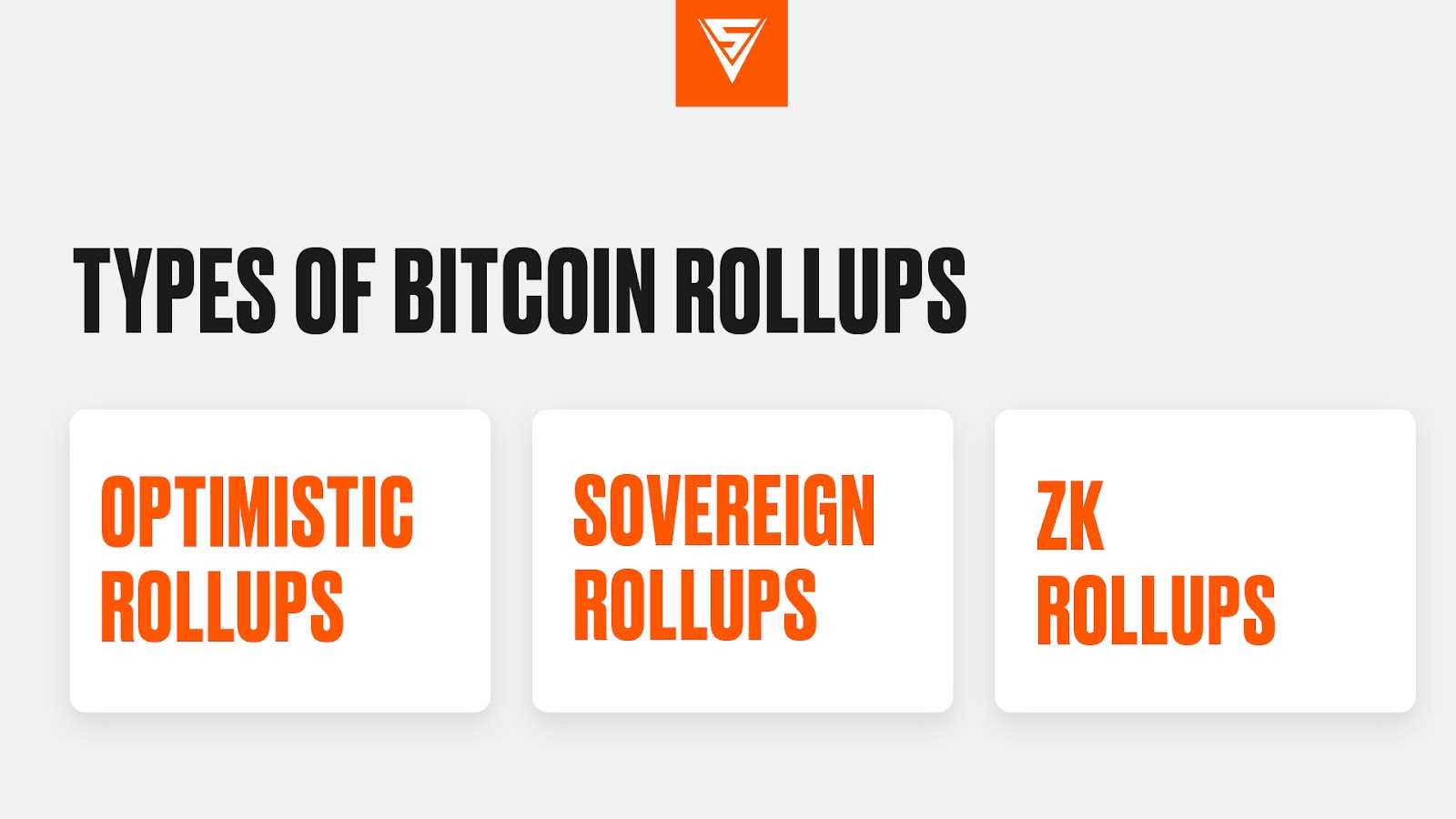
Analyze how wrapped BTC moves between Layer 1 and the rollup. Prefer bridges with multi-sig governance or light-client verification over single-signature custodians. Verify that users can exit the rollup without permission or excessive delays, which protects against validator censorship.

Review on-chain data from sources like DeFiLlama to see where the capital is actually flowing. Scrutinize the yield sources; if returns are unsustainable or rely on opaque lending protocols, the risk of a liquidity run is high. Look for transparent treasury management and audited smart contracts.
| Feature | Security Standard | Risk Level |
|---|---|---|
| ZK Proofs | Cryptographically verified | Low |
| Optimistic Proofs | Challenger-dependent | Medium |
| Sidechain Bridge | Multi-sig trusted | High |
No comments yet. Be the first to share your thoughts!