
The Liquidity Fragmentation Problem
Bitcoin commands the largest market capitalization in the crypto ecosystem, yet the vast majority of this capital sits idle. Unlike Ethereum, where native assets flow freely into decentralized applications, Bitcoin's liquidity is siloed on Layer 1. This isolation creates a paradox: the most secure and valuable asset in the space is the least usable within the broader decentralized finance (DeFi) economy.
When users attempt to utilize Bitcoin in DeFi protocols, they typically rely on wrapped tokens or cross-chain bridges. These solutions introduce significant friction, including high gas fees, extended settlement times, and, most critically, trust assumptions. Wrapping Bitcoin often requires locking the original asset in a custodial contract or relying on a decentralized bridge, both of which introduce points of failure that contradict Bitcoin's core ethos of sovereignty and security.
This fragmentation prevents Bitcoin from achieving its full potential as a global settlement layer. Liquidity is scattered across disparate chains and wrapped variants, reducing capital efficiency and increasing slippage for traders. The result is a fragmented market where Bitcoin's price discovery is often secondary to its utility as a base layer for other ecosystems.
Rollups offer the necessary infrastructure to unify this liquidity. By enabling native Bitcoin settlement and execution, rollups allow BTC to remain on its secure base layer while participating in high-throughput applications. This approach eliminates the need for risky cross-chain bridges, reducing counterparty risk and restoring Bitcoin's role as the primary asset for decentralized finance.
Comparison of Liquidity Models
| Feature | Bitcoin Layer 1 | Wrapped BTC on L2/EVM | Native Bitcoin Rollup |
|---|---|---|---|
| Settlement Security | Highest (PoW) | Medium (Dependent on Bridge) | High (Bitcoin PoW) |
| Execution Speed | Slow (~10 min blocks) | Fast | Fast |
| Trust Assumptions | None (Sovereign) | High (Custodian/Bridge) | Low (Native Integration) |
| DeFi Composability | Limited | High | High |
The table above illustrates the tradeoffs between current bridging solutions and the emerging rollup architecture. While wrapped tokens offer immediate access to DeFi, they sacrifice the security guarantees of the Bitcoin network. Native rollups aim to capture the best of both worlds: the security of Bitcoin and the flexibility of modern execution layers.
As the market evolves in 2026, the shift toward native Bitcoin liquidity is becoming increasingly apparent. Emerging onchain innovation and shifting liquidity patterns suggest that the next phase of crypto will be defined by how effectively Bitcoin can be utilized beyond simple store-of-value transactions. Rollups are not just an upgrade; they are the bridge to Bitcoin's next chapter as a foundational asset for decentralized applications.
Optimistic vs ZK Rollup Trade-offs
Bitcoin Layer 2s rely on two primary architectures to settle transactions off-chain: optimistic rollups and zero-knowledge (ZK) rollups. Both aim to solve liquidity fragmentation by batching transactions, but they use different cryptographic proofs to ensure validity. Understanding the trade-offs between security models, withdrawal times, and costs is essential for selecting the right infrastructure for specific use cases.
| Feature | Optimistic Rollup | ZK Rollup |
|---|---|---|
| Security Model | Fraud proofs (dispute window) | Validity proofs (zero-knowledge) |
| Withdrawal Time | 7 days (challenge period) | Minutes to hours |
| Transaction Cost | Lower (cheaper data availability) | Higher (expensive proof generation) |
| Finality | Slower (requires waiting for disputes) | Fast (immediate validity) |
| Complexity | Simpler smart contract logic | Complex cryptographic circuits |
Optimistic rollups assume transactions are valid unless proven otherwise. This approach relies on a challenge period, typically seven days, during which anyone can submit a fraud proof to reverse incorrect state changes. While this model offers lower transaction costs and simpler development environments, it introduces significant latency for withdrawals and finality. Users must wait out the dispute window to access their funds, making optimistic rollups less suitable for high-frequency trading or immediate settlement needs.
ZK rollups, by contrast, generate a cryptographic proof that mathematically verifies the correctness of every batch before it is posted to Bitcoin. This eliminates the need for a challenge period, enabling near-instant withdrawals and finality. However, generating these zero-knowledge proofs is computationally intensive, leading to higher transaction fees compared to optimistic approaches. The complexity of ZK circuit design also presents a steeper barrier for developers, though recent advances in proof systems are rapidly closing this gap.
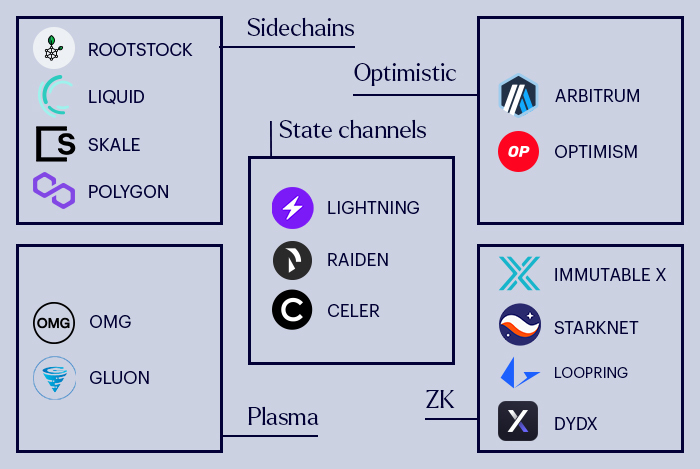
The choice between these architectures often depends on the specific application. Optimistic rollups are well-suited for applications where cost is the primary driver and users can tolerate longer withdrawal times, such as long-term savings or non-urgent transfers. ZK rollups are preferred for use cases requiring immediate finality and higher security guarantees, such as decentralized exchanges or real-time gaming, despite the higher operational costs. As the Bitcoin L2 ecosystem matures, hybrid models may emerge to balance these competing demands.
Market Structure Shifts in 2026
The crypto market in 2026 is defined by a transition from speculative retail cycles to institutional-grade infrastructure. With clearer regulatory frameworks emerging in key jurisdictions and expanding access for traditional finance, the groundwork laid in previous years is beginning to yield tangible results. This environment favors protocols that solve real utility problems, such as the liquidity fragmentation that Bitcoin rollups aim to address.
Institutional inflows are no longer just chasing price appreciation; they are deploying capital into ecosystems that offer predictable yields and robust compliance tools. This shift has changed how liquidity is sourced and allocated. Instead of fragmented pools across disparate chains, capital is increasingly consolidating into high-throughput, low-cost environments. Bitcoin rollups provide this infrastructure, allowing institutional actors to participate in Bitcoin’s ecosystem without sacrificing the security guarantees of the base layer.
The macroeconomic backdrop further supports this structural shift. Improving global liquidity conditions have reduced the cost of capital, encouraging long-term holding and staking rather than short-term trading. As a result, the market is becoming more resilient to volatility, with deeper order books and tighter spreads. This stability is essential for the widespread adoption of rollup technology, which relies on consistent transaction volume to remain economically viable.
Regulatory clarity has also reduced the barrier to entry for large-scale participants. Institutions that previously hesitated due to legal uncertainty are now actively integrating Bitcoin rollups into their treasury management and payment systems. This adoption is not merely symbolic; it reflects a fundamental change in how Bitcoin is used as a medium of exchange and a store of value. The combination of regulatory certainty, institutional demand, and technological maturity positions Bitcoin rollups as a central pillar of the 2026 market structure.
Choosing the Right Bitcoin L2
Selecting a Bitcoin Layer 2 requires matching the rollup’s architecture to your specific needs for speed, cost, and security. The landscape is divided into three primary models, each offering distinct trade-offs that determine where they fit in the ecosystem.
Optimistic rollups assume transactions are valid unless proven otherwise. This model offers lower fees and higher throughput, making it ideal for high-frequency trading or applications where immediate confirmation is less critical than cost efficiency. The trade-off is a longer withdrawal window, typically seven days, to allow for fraud proofs.
Zero-Knowledge (ZK) rollups generate cryptographic proofs that validate every transaction on-chain. This approach provides near-instant finality and stronger security guarantees, as validity is mathematically verified rather than assumed. It is the preferred choice for DeFi applications and high-value transfers where capital safety and speed are paramount.
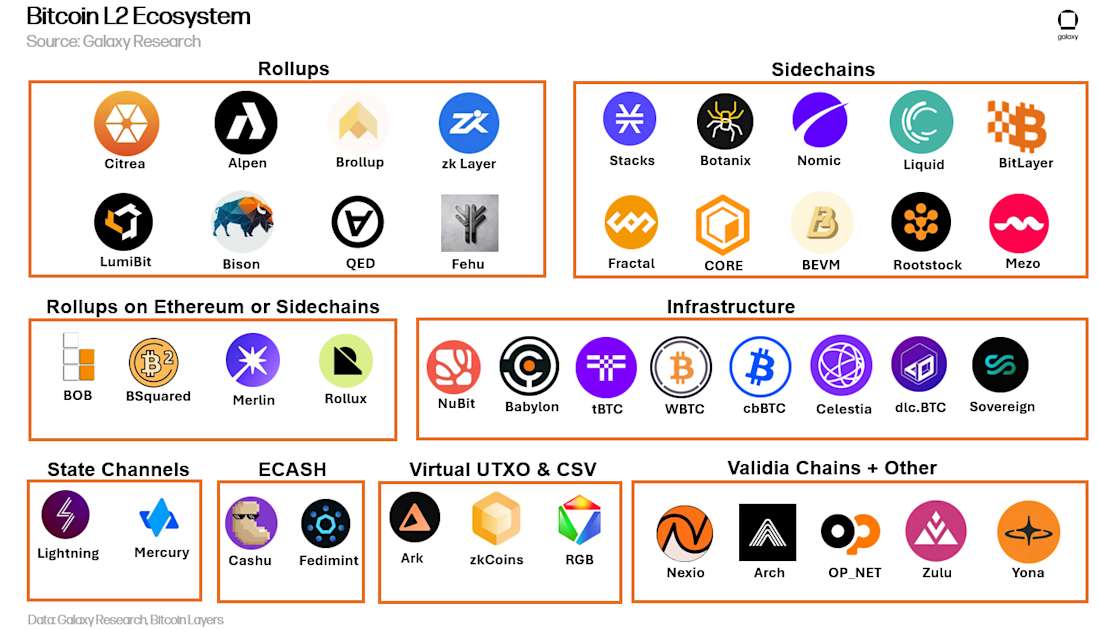
Sovereign rollups prioritize decentralization and data availability by allowing users to control their own data. While they offer significant privacy and censorship resistance, they often rely on more complex validation mechanisms. This model suits users who value sovereignty over raw speed or absolute security, acting as a middle ground between the two extremes.
| Rollup Type | Finality | Security Model | Best Use Case |
|---|---|---|---|
| Optimistic | ~7 days | Fraud Proofs | High throughput, low cost |
| ZK | Minutes | Validity Proofs | DeFi, high-value transfers |
| Sovereign | Variable | Data Availability | Privacy, censorship resistance |
When evaluating these options, consider the depth of the dApp ecosystem and the liquidity available on each chain. A rollup with superior technology is less useful if no applications are built on it. Check the total value locked (TVL) and active developer count to gauge long-term viability. For the most current market context, refer to live data on Bitcoin’s performance to understand broader network conditions.
Common Questions About Bitcoin Rollups
Bitcoin rollups are layer-2 scaling solutions that bundle transactions off-chain before settling them on the main Bitcoin network. The three primary types being developed are optimistic rollups, zero-knowledge (ZK) rollups, and sovereign rollups, each offering different tradeoffs in speed and security.
No comments yet. Be the first to share your thoughts!