
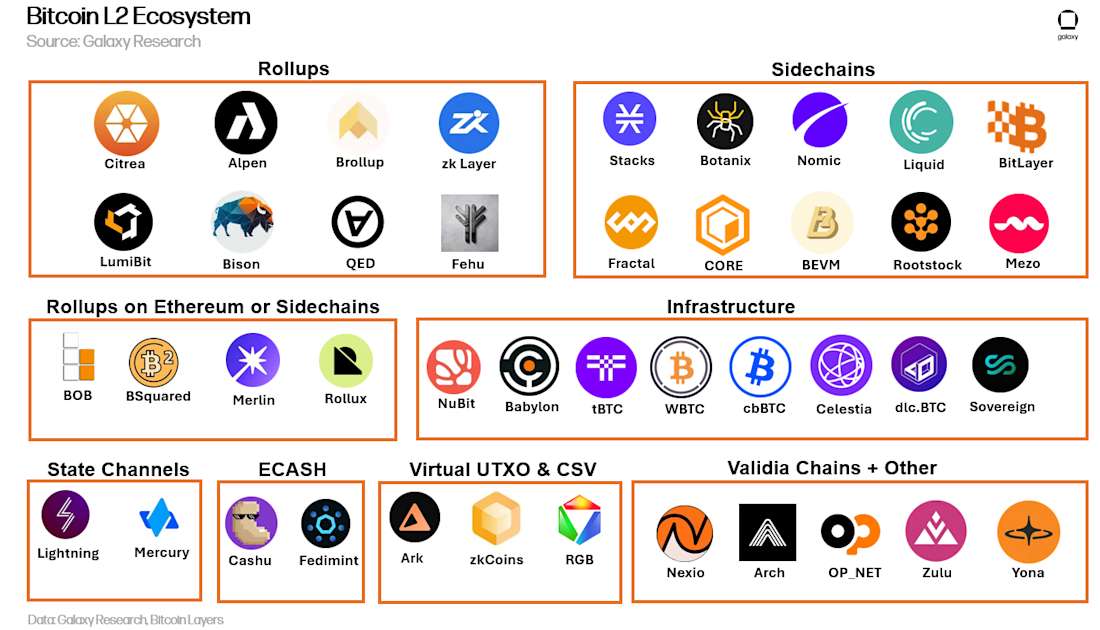
What Bitcoin Rollups Actually Do
A Bitcoin rollup is a scaling solution that processes transactions away from the main blockchain and posts the results to Bitcoin L1 for settlement. Imagine hundreds of individual payments bundled into a single receipt. This approach allows the network to handle far more transactions than it could if every single payment required its own spot on the blockchain.
The core value proposition is off-chain computation with on-chain settlement. Instead of clogging the main network, a rollup collects transactions, executes them off-chain, and then submits a compact summary—or proof—to Bitcoin. This summary serves as evidence that the transactions were valid, allowing Bitcoin to verify them quickly without re-executing every step.
It is important to distinguish this from sidechains or state channels. Sidechains often run on separate blockchains with their own consensus mechanisms, meaning they don't inherit Bitcoin's full security. State channels require participants to stay online and interact directly. Rollups, by contrast, rely on Bitcoin's underlying security model. They keep the heavy lifting off-chain but anchor the final state on the main chain, ensuring that the settlement remains as secure as Bitcoin itself.
Zk rollups vs optimistic rollups on bitcoin
Bitcoin rollups rely on two distinct cryptographic methods to secure transactions off-chain while anchoring to the main network. The choice between zero-knowledge (ZK) and optimistic rollups defines the user experience, cost structure, and security assumptions of any Layer-2 solution built on Bitcoin.
ZK rollups use validity proofs to guarantee that every transaction in a batch is correct before posting data to the blockchain. This approach offers immediate finality because the network does not need to wait for a dispute period. The trade-off is high computational cost; generating these complex mathematical proofs requires significant processing power, which can increase fees for users during peak times.
Optimistic rollups operate on the assumption that all transactions are valid unless proven otherwise. They post transaction data to the blockchain and allow a challenge period, typically around seven days, for anyone to detect and report fraud. This method is cheaper to run because it avoids the heavy computational burden of proof generation. However, it introduces latency, as users must wait for the challenge window to close before funds are fully withdrawable.
The table below compares these approaches across critical performance metrics.
| Feature | ZK Rollup | Optimistic Rollup |
|---|---|---|
| Finality Speed | Immediate | 7-day challenge period |
| Security Model | Validity proofs | Fraud proofs |
| Computational Cost | High (proof generation) | Low (data posting) |
| Data Availability | Compact proofs | Full transaction data |
Both models aim to solve Bitcoin’s scalability limits by aggregating transactions. ZK rollups prioritize speed and security, making them suitable for high-frequency trading or applications requiring instant settlement. Optimistic rollups prioritize cost-efficiency and simplicity, often serving as a more accessible entry point for everyday transactions and decentralized applications.
How Bitcoin Rollups Unlock DeFi
Bitcoin rollups transform the network from a simple ledger into a functional smart contract platform. By processing transactions off-chain and posting compressed data to the Bitcoin mainnet, rollups solve the historical bottlenecks of high fees and slow confirmation times. This infrastructure shift allows developers to build complex decentralized applications that were previously too expensive or technically impossible to deploy directly on Layer 1.
Complex Smart Contracts Become Viable
The primary limitation of Bitcoin’s native scripting language is its lack of Turing completeness, which prevents complex logic like loops or conditional state changes. Rollups bypass this by executing smart contracts in more flexible environments—such as EVM-compatible chains or custom virtual machines—while using Bitcoin solely for settlement and security. This means developers can deploy sophisticated DeFi protocols, including lending markets and automated market makers, without compromising the security guarantees of the Bitcoin network.
Lowering the Cost of On-Chain Activity
Transaction fees on Bitcoin often fluctuate wildly based on network congestion, making micro-transactions or frequent interactions economically unviable. Rollups aggregate hundreds of transactions into a single proof, spreading the settlement cost across all users. This batching mechanism drastically reduces the per-user fee, enabling use cases like micropayments, gaming, and high-frequency trading. For a network where every satoshi counts, this efficiency is the gateway to mass adoption.
Bridging Liquidity and Security
Rollups do not just improve speed; they create a secure bridge for Bitcoin liquidity. Instead of locking BTC in wrapped, centralized tokens on foreign chains, rollups allow native BTC to be used as collateral within a secured environment. This reduces counterparty risk and opens the door for decentralized finance primitives that respect Bitcoin’s immutability. As the ecosystem matures, this integration will likely become the standard for secure, scalable Bitcoin-based finance.
Bitcoin price context and market impact
Bitcoin’s price action remains the primary anchor for the broader crypto market, but its utility is shifting from simple store-of-value speculation toward functional infrastructure. The introduction of rollups—both ZK and Optimistic—does not change Bitcoin’s monetary policy, but it fundamentally alters how the network processes value. By moving transaction execution off-chain while keeping settlement on the main chain, these Layer-2 solutions alleviate congestion without compromising security.
This architectural shift has direct implications for asset utility. When transaction costs drop and throughput increases, Bitcoin becomes viable for high-frequency applications like micropayments and decentralized finance (DeFi) interactions that were previously too expensive on Layer 1. The chart above illustrates recent volatility trends, but the underlying volume data tells a different story: increased on-chain activity often correlates with the maturation of these scaling layers rather than just speculative buying.
Market participants must distinguish between short-term price noise and long-term network health. Rollups do not issue new Bitcoin; they simply make the existing supply more efficient to use. As adoption of these scaling solutions grows, the demand for block space on the main chain may stabilize, potentially reducing fee volatility during peak periods. This transition supports a more robust ecosystem where Bitcoin serves as both a settlement layer and a scalable platform for global finance.
Frequently Asked Questions About Bitcoin Rollups
Understanding how Bitcoin rollups work requires distinguishing them from common blockchain terminology. Here are the answers to the most common questions about scaling Bitcoin.
No comments yet. Be the first to share your thoughts!