
What Bitcoin Rollups Actually Do
Bitcoin rollups are Layer 2 scaling solutions designed to process transactions off-chain while relying on the Bitcoin L1 for settlement and data availability. This architecture allows the network to handle significantly more throughput than the base layer can support alone, without requiring a fundamental change to Bitcoin's underlying security model. By bundling transactions and posting compressed proofs to the main chain, rollups preserve the decentralization and immutability that define Bitcoin.
The core value proposition of a Bitcoin rollup is security inheritance. Unlike sidechains, which operate on their own consensus mechanisms and validator sets, rollups post data to Bitcoin blocks. This means that the validity of transactions is ultimately anchored to Bitcoin's proof-of-work security. If the rollup protocol fails or is compromised, users can still recover their funds by interacting directly with the Bitcoin L1, where the state root is recorded. This reduces the trust assumptions required from users, as they do not need to trust a centralized sequencer or a separate group of validators to maintain the integrity of their assets.
This approach distinguishes Bitcoin rollups from generic Layer 2 solutions built on other ecosystems. While Ethereum rollups like Optimism or Arbitrum post data to Ethereum, Bitcoin rollups must handle the unique constraints of the Bitcoin scripting language and block size. They often use techniques like data availability sampling or optimistic verification to ensure that the data posted is sufficient for any node to reconstruct the state. This ensures that the network remains secure and transparent, even as transaction volume scales.
For users, this means access to faster and cheaper transactions while staying within the Bitcoin ecosystem. Whether for decentralized finance applications or simple payments, Bitcoin rollups offer a path to scalability that does not compromise the foundational security guarantees of the network. As the infrastructure matures, these rollups are expected to become the primary layer for high-frequency activity on Bitcoin, keeping the base layer reserved for high-value settlement and security.
Rollups vs sidechains: the security choices that change the plan
Bitcoin rollups and sidechains both aim to increase throughput, but they solve the security problem in fundamentally different ways. Understanding this distinction is critical for determining which architecture suits high-stakes value transfers.
Sidechains operate as independent blockchains with their own native tokens and validator sets. They do not inherit the security of the Bitcoin network. Instead, they rely on their own consensus mechanism, which typically involves fewer nodes and less computational power than Bitcoin’s Proof-of-Work. This creates a "security gap." While sidechains are faster and cheaper to operate, they are more vulnerable to 51% attacks or coordinated validator collusion. If a sidechain’s security budget is too low, its native token and the assets bridged to it become risky holdings.
Rollups, by contrast, are designed to inherit Bitcoin’s security directly. They process transactions off-chain but post cryptographic proofs (such as validity proofs or fraud proofs) back to the Bitcoin mainnet. This means the rollup’s state is anchored to Bitcoin’s consensus. Even if the rollup’s sequencer or validator set behaves maliciously, the underlying settlement layer remains secure because it is protected by Bitcoin’s massive hashrate. For users moving significant value, this inheritance of security is the primary advantage of rollups over sidechains.
The table below summarizes the key differences in security models, data availability, and exit mechanisms.
| Feature | Rollup | Sidechain |
|---|---|---|
| Security Source | Inherits Bitcoin PoW security | Independent validator set |
| Data Availability | Posted to Bitcoin L1 (or DA layer) | Secured by sidechain itself |
| Exit Mechanism | Trustless withdrawal via proof verification | Often requires multi-sig or trusted bridge |
| Validator Set | Decentralized or sequencer-managed | Federated or delegated PoS |
This structural difference dictates use case. Sidechains may still be appropriate for low-value, high-frequency experiments where speed is prioritized over absolute security. However, for any application involving substantial capital or long-term value storage, rollups provide the necessary security guarantees by tying their fate directly to the Bitcoin network.
Optimistic vs ZK Rollups on Bitcoin
Choosing a rollup architecture for Bitcoin involves balancing speed of deployment against the immediacy of finality. The two dominant approaches—Optimistic and Zero-Knowledge (ZK) rollups—handle transaction validity differently, leading to distinct tradeoffs for developers and users.
Optimistic Rollups: Speed and Simplicity
Optimistic rollups assume transactions are valid by default, only requiring proof of correctness if a challenger disputes them. This model allows for faster deployment and easier integration with existing smart contract logic, as it does not require complex cryptographic proofs for every transaction.
The primary drawback is the challenge period. Users must wait a set duration (often seven days on Bitcoin-based systems) before funds can be withdrawn to ensure no fraudulent activity is detected. This delay introduces a liquidity lock-up, which can be a barrier for users seeking immediate access to their assets.
Zero-Knowledge Rollups: Finality and Privacy
ZK rollups generate a cryptographic proof (a zero-knowledge proof) for every batch of transactions submitted to the Bitcoin blockchain. This proof mathematically guarantees that the transactions are valid without revealing the underlying data. The result is immediate finality; users can withdraw their funds as soon as the batch is confirmed on Layer 1.
While ZK rollups offer superior security guarantees and privacy, they are significantly more complex to build. Generating these proofs requires substantial computational resources, which can lead to higher costs for transaction processing. However, as proof-generation technology improves, these costs are expected to decrease.
Technical Comparison
The following table outlines the core differences between these two scaling approaches:
| Feature | Optimistic | Zero-Knowledge |
|---|---|---|
| Validity Proof | Challenger-based | Cryptographic proof |
| Withdrawal Time | Delayed (e.g., 7 days) | Immediate |
| Development Complexity | Lower | Higher |
| Privacy | Limited | High |
Which Approach Fits Your Needs?
If you are building a dApp that requires rapid iteration and compatibility with existing Ethereum-style smart contracts, an Optimistic rollup may be the pragmatic starting point. The lower barrier to entry allows you to launch faster, even if you must accommodate the withdrawal delay.
For applications where user trust and immediate fund access are paramount—such as high-frequency trading or privacy-sensitive services—a ZK rollup is the superior choice. The cryptographic guarantee of validity removes the need for users to trust the operator, aligning more closely with Bitcoin’s trust-minimized ethos.
Leading Bitcoin L2 Projects in 2026
The Bitcoin L2 landscape has moved beyond experimental phases into distinct architectural camps. Each project prioritizes a different balance between security, decentralization, and throughput. Understanding these approaches helps identify which ecosystem aligns with specific use cases.
Stacks (STX)
Stacks remains the most established L2, utilizing a proof-of-transfer (PoX) mechanism to secure its chain with Bitcoin. It enables smart contracts and Decentralized Applications (dApps) while inheriting Bitcoin’s settlement security. Its approach focuses on composability within the Bitcoin ecosystem.
Merlin Chain
Merlin Chain operates as a high-throughput Layer 2 utilizing optimistic rollup technology. It aims to provide low-cost transactions and fast finality for DeFi applications. By batching transactions off-chain and submitting proofs to Bitcoin, it reduces congestion on the main network.
BRC-20 Ordinals Platforms
Several platforms focus on the BRC-20 and Ordinals standards, enabling NFT and token issuance directly on Bitcoin. These L2s often use sidechain or parallel execution models to handle the high volume of inscription data. They cater specifically to the collector and speculative asset market.
Risks and Considerations for Users
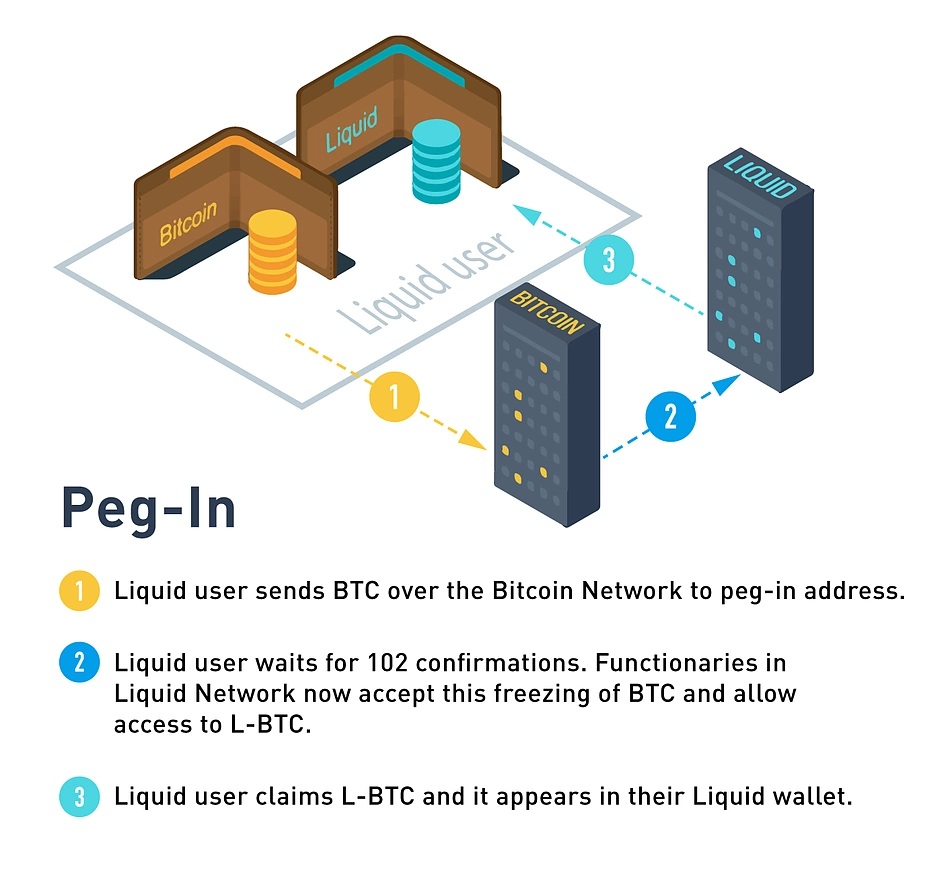
Bitcoin rollups offer speed, but they introduce new attack surfaces that don't exist on the base layer. The primary concern is bridge security. When you move Bitcoin from the main chain to a rollup, you are relying on a smart contract or a multi-signature setup to hold your funds. If that bridge is compromised, the Bitcoin is gone. Unlike Ethereum, where you can often exit via a smart contract dispute, Bitcoin rollups often have fixed exit windows. If you need your funds back immediately during a crisis, you might be forced to wait days or weeks.
Smart contract vulnerabilities are another significant risk. Rollups rely on complex code to manage state transitions and fraud proofs. Bugs in this code can lead to frozen funds or unauthorized withdrawals. Because Bitcoin's scripting language is limited, rollups often use EVM-compatible or custom VMs, which means you are trusting the security of those virtual machines. If the rollup's operator is malicious, they could potentially censor transactions or manipulate the state, although most designs include economic penalties for such behavior.
Cross-chain transactions add another layer of complexity. Moving assets between different rollups or between a rollup and the main chain requires careful attention to gas fees and network congestion. During high volatility, liquidity on these bridges can dry up, making it difficult to exit at a fair price. Users must also understand that the security of a Bitcoin rollup is not as robust as Bitcoin itself. You are trading some decentralization for speed, and understanding this trade-off is essential before committing significant capital.
No comments yet. Be the first to share your thoughts!