
Bitcoin rollups 2026: the scaling limits to account for
The narrative around Bitcoin rollups 2026 has shifted from theoretical speculation to a tangible infrastructure battle. As Layer 2 solutions attempt to bridge the gap between Bitcoin’s security and Ethereum’s execution speed, the primary constraint remains: finality and settlement latency. Rollups must prove they can process transactions without compromising the base layer’s integrity, a trade-off that defines the 2026 landscape.
Market analysts project that 2026 will be the year these constraints are priced into valuation models. According to Bitcoin Suisse, the network is approaching critical mass, with price targets suggesting a move toward $180K as quantum-resistant features and scaling layers mature. This is not just about speed; it is about making Bitcoin usable for everyday transactions without relying on centralized custodians. Haseeb Qureshi of Paradigm notes that while stablecoins are the immediate growth engine for Bitcoin L2s, the underlying rollup technology is what will sustain long-term adoption.
The technical challenge is no longer just sequencing transactions but ensuring that fraud proofs or validity proofs can be verified on-chain efficiently. If rollups fail to deliver cheap, instant finality, they remain niche experiments. However, if the 2026 roadmap holds, these layers will transform Bitcoin from a store of value into a settlement layer for a global financial system.
Bitcoin rollups 2026 choices that change the plan
Bitcoin rollups promise to solve the network’s throughput bottleneck, but they do not do so without friction. In 2026, the technology has matured from experimental proofs of concept to production-grade infrastructure. However, the tradeoffs between speed, cost, and decentralization remain distinct for each architecture. Understanding these differences is essential before committing capital or migrating applications.
The primary decision point is the security model. Rollups inherit security from Bitcoin’s base layer in different ways. Some rely on optimistic fraud proofs, which require a challenge period before funds are released. Others use zero-knowledge validity proofs, offering immediate finality but higher computational costs for sequencers. The choice impacts how long users must wait for withdrawals and who bears the risk of a failed transaction.
Liquidity fragmentation is another critical factor. As capital disperses across multiple rollup chains, deep order books become harder to maintain. Users may face higher slippage on decentralized exchanges compared to the Ethereum L2 ecosystem, which has benefited from years of liquidity aggregation. Evaluating the total value locked (TVL) and daily volume on each rollup helps gauge market depth.
To compare the leading options, we break down the key technical and economic tradeoffs. This table highlights the structural differences that will define the user experience in 2026.
| Rollup Type | Security Model | Finality Time | Avg. Tx Cost | Sequencer Status |
|---|---|---|---|---|
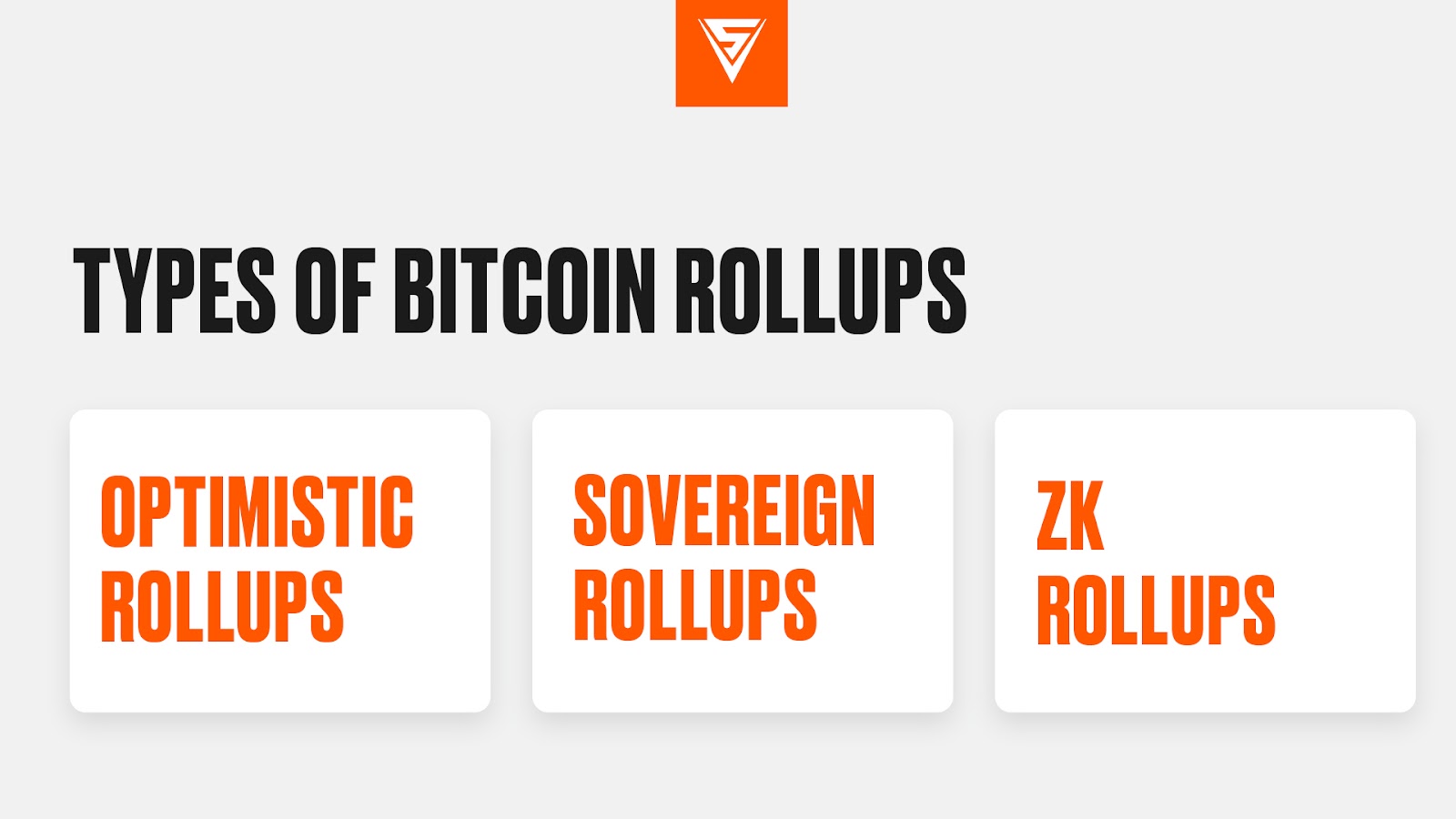
| Optimistic (e.g., Merlin, B2) | Fraud Proofs | 7 days | Low | Centralized |
| ZK (e.g., zkSync, StarkNet) | Validity Proofs | Instant | Medium | Centralized |
| Hybrid (e.g., BitVM) | Bitcoin Native | Variable | High | Decentralized |
The table above simplifies complex technical distinctions. For instance, while ZK rollups offer instant finality, the cost of generating proofs can spike during network congestion. Optimistic rollups are cheaper but require users to lock funds for over a week to ensure security. Hybrid models attempting to anchor directly to Bitcoin offer the highest security but currently suffer from high complexity and cost.
When evaluating these tradeoffs, look beyond the headline fees. Consider the withdrawal times and the trust assumptions required. A cheap transaction that takes a week to settle may not be suitable for high-frequency trading. Conversely, instant finality with high fees may be too expensive for small-value transfers. The "best" rollup depends entirely on your specific use case.
Choose the right rollup for your use case
Not all Bitcoin Layer 2 solutions serve the same purpose. The architecture you select dictates your security model, transaction costs, and exit liquidity. Treat this as a procurement decision: you are balancing speed against the trust assumptions you are willing to make.
If you are moving significant value or holding long-term, choose rollups anchored directly to Bitcoin’s mainnet consensus. These solutions rely on zero-knowledge proofs or optimistic fraud proofs verified on-chain. While gas fees are higher, the security guarantee is equivalent to holding BTC in your own wallet. This is the "digital safe" approach.
For microtransactions, remittances, or daily commerce, choose rollups with lower security assumptions but faster finality. These solutions often use sidechains or federated models that require trusting a small set of validators. The trade-off is clear: you sacrifice some decentralization for near-instant, near-zero fee transactions. This is the "digital cash" approach.

Before committing funds, check where your exit liquidity lives. A rollup is only useful if you can withdraw to Bitcoin mainnet or a major DEX without prohibitive costs or delays. Look for solutions with deep liquidity pools on established bridges. If the exit route is thin, you risk being trapped in the Layer 2 during market stress. This is the "liquidity check" approach.
| Feature | ZK Rollup | Optimistic Rollup |
|---|---|---|
| Security Model | Cryptographic proofs verified on-chain | Fraud proofs submitted on-chain |
| Finality Time | Minutes to hours | 7 days for challenge period |
| Best Use Case | High-value transfers, DeFi | General purpose smart contracts |
Spotting Weak Bitcoin Rollup Options
Bitcoin rollups promise mass adoption, but the market is crowded with projects that overpromise and underdeliver. Not every Layer 2 solution is built for longevity, and several popular options fail basic security or adoption tests. Identifying these weak links protects your capital from long-term stagnation.
Over-reliance on Centralized Sequencers
Some rollups claim decentralization but route all transactions through a single, centralized operator. If that operator goes offline or censors transactions, users are locked out. Always verify the sequencer’s decentralization roadmap. Projects without a clear plan to remove this single point of failure are high-risk liabilities, not scalable infrastructure.
Vague Tokenomics and Vesting Schedulesn
Many new rollup tokens have complex vesting schedules that dump supply on the market months after launch. If the team and early investors hold 50% or more of the supply with cliff periods under two years, the token is likely designed for speculation, not utility. Check the token distribution report before assuming the project has aligned incentives.
Low Total Value Locked (TVL) and Activity
A rollup with less than $10 million in TVL is likely a ghost chain. Low activity means high slippage for users and minimal security budget for the network. Ignore projects that rely on marketing spend rather than organic user growth. Real adoption is measured by daily active addresses and transaction volume, not whitepaper promises.
Lack of Audits or Transparent Code
Smart contracts handling Bitcoin bridges must be audited by reputable firms like Trail of Bits or OpenZeppelin. Projects with no public audits or private code repositories are gambling with user funds. Never deposit assets into a rollup that hasn’t undergone rigorous, public security scrutiny.
Key Takeaway
Prioritize rollups with transparent governance, decentralized sequencers, and proven TVL. Avoid projects that rely on centralization or speculative tokenomics.
No comments yet. Be the first to share your thoughts!