
Bitcoin rollups 2026 market context
The Bitcoin network is approaching a structural inflection point. As transaction volume continues to climb, the base layer's inherent throughput limitations are creating friction that affects both user experience and fee market stability. In 2026, the focus shifts from speculative narrative to technical necessity. Scaling is no longer an optional upgrade but a critical requirement for maintaining Bitcoin's utility as a global settlement layer.
Historical data shows that Bitcoin's transaction throughput has remained relatively static while demand fluctuates. This mismatch leads to congestion during peak periods, driving up fees and delaying confirmations. The introduction of rollup technology offers a path to increase throughput without compromising the security guarantees that make Bitcoin unique. By moving computation and data availability off-chain while settling proofs on-chain, rollups can process thousands of transactions per second.
The market is beginning to price in this shift. Institutional interest in Bitcoin infrastructure is growing, with a focus on solutions that enhance scalability while preserving decentralization. This is not merely a technical adjustment but a fundamental evolution of the network's architecture. The goal is to create a system that can handle global-scale payments and smart contract execution without sacrificing the security model that has protected Bitcoin for over a decade.
This context sets the stage for understanding why 2026 is a pivotal year. The convergence of increased demand, technological maturity, and institutional adoption creates a unique environment for Bitcoin rollups to gain traction. The following sections will explore the specific technologies and strategies that are driving this change.
Rollup architectures gaining traction
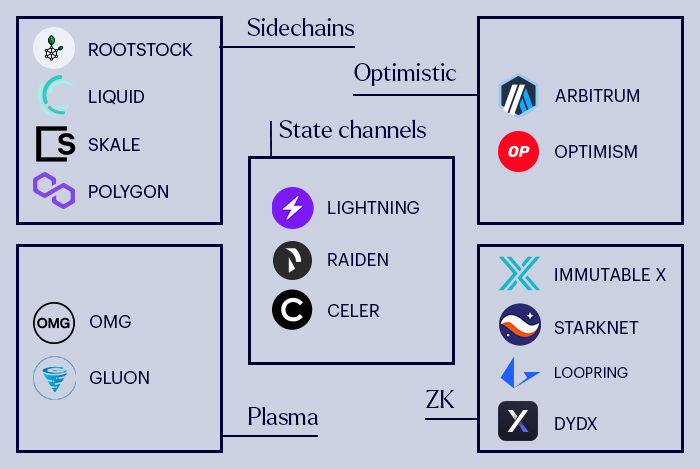
Bitcoin Layer 2 development in 2026 centers on three distinct technical approaches: ZK-rollups, Optimistic rollups, and hybrid models. Each architecture addresses the throughput-security trade-off differently, relying on Ethereum’s security inheritance or Bitcoin’s native finality.
ZK-rollups dominate the current deployment landscape due to their predictable finality. By generating cryptographic proofs for every batch of transactions, these rollups allow users to withdraw funds to Bitcoin mainnet in minutes rather than weeks. Projects like Stackup and various ZK-EVM implementations are prioritizing this model to solve the latency issues inherent in earlier Bitcoin scaling attempts.
Optimistic rollups remain a secondary but significant category. These systems assume transactions are valid by default and only require computation if a fraud proof is submitted during a challenge period. While this approach offers higher theoretical throughput for complex smart contracts, it introduces a seven-day withdrawal delay, making it less suitable for high-frequency trading or time-sensitive financial operations.
Hybrid models attempt to merge the speed of Optimistic execution with the security guarantees of ZK proofs. These architectures are still in early testing phases on Bitcoin L2s, aiming to reduce the computational overhead of proof generation while maintaining near-instant finality. The market is currently evaluating which hybrid approach can scale effectively without compromising Bitcoin’s core security properties.
| Architecture | Finality Time | Security Model |
|---|---|---|
| ZK-Rollups | Minutes | Cryptographic Proofs |
| Optimistic Rollups | 7 Days | Fraud Proofs |
| Hybrid Models | Short (Testing) | ZK + Optimistic |
Throughput gains and real-world usage
Bitcoin rollups have moved beyond theoretical benchmarks into measurable throughput improvements, fundamentally altering the cost structure for on-chain activity. By batching transactions off the main chain and settling proofs on Bitcoin, these Layer 2 solutions offer significantly lower fees and higher speeds without sacrificing the security guarantees of the base layer. This architectural shift is enabling use cases that were previously economically unviable on Bitcoin due to block space constraints.
The performance gains are most visible in decentralized finance (DeFi) and high-frequency payments. In 2026, several prominent Bitcoin rollups are processing thousands of transactions per second (TPS), a stark contrast to Bitcoin’s base layer limit of roughly 7 TPS. This increased capacity allows for complex DeFi interactions, such as automated market making and lending protocols, to operate with near-instant finality and fractional cent fees. Payments networks are similarly benefiting, with stablecoin transfers becoming competitive with traditional wire transfers in terms of speed and cost.
Adoption is being driven by applications that require high throughput and low latency. For instance, Bitcoin-native derivatives platforms are leveraging rollups to offer leveraged trading with minimal slippage, while payment processors are integrating rollup infrastructure to facilitate micro-transactions for everyday commerce. These real-world deployments demonstrate that the scalability trilemma is being resolved: Bitcoin rollups are achieving high throughput and low costs while maintaining the robust security of the Bitcoin network.
The economic model underpinning this growth is clear. As transaction volume increases, the demand for block space on the rollup grows, but the cost per transaction remains low due to the shared security and batching efficiency. This creates a sustainable ecosystem where developers can build complex applications without worrying about gas price volatility, and users can transact freely without prohibitive fees. The result is a more liquid and active Bitcoin economy, directly contributing to the asset’s long-term utility and value proposition.
Security trade-offs and regulatory outlook
Bitcoin rollups operate within a high-stakes environment where throughput gains must not compromise the underlying security model. Unlike Ethereum L2s that rely on sequencer decentralization, Bitcoin rollups inherit the network's base-layer finality. This creates a distinct security hierarchy: the rollup processes transactions off-chain, but the settlement layer remains anchored to Bitcoin's proof-of-work consensus. Users must verify that the rollup operator cannot censor transactions or double-spend without triggering a fraud or validity proof that reverts the state on-chain.
The trade-off is often latency versus decentralization. Optimistic rollups assume validity by default, requiring a challenge period (typically 7 days) to detect fraud. This delay impacts user experience but reduces on-chain data costs. Zero-knowledge rollups offer immediate finality but require significant computational overhead to generate proofs. The choice between these models defines the rollup's risk profile. If the ZK prover infrastructure is centralized, the system introduces a new trust assumption that contradicts Bitcoin's permissionless ethos.
Regulatory scrutiny will likely focus on the rollup operator's role in transaction ordering and censorship. If a single entity controls the sequencer, it can selectively include or exclude transactions, creating a centralized choke point. Regulators may classify such operators as money transmitters, subjecting them to strict compliance requirements. This legal pressure could force rollups to adopt decentralized sequencer networks or multi-signature governance models to mitigate regulatory risk.
The convergence of these technical and regulatory factors will determine the viability of Bitcoin L2s. Projects that prioritize transparent, verifiable security models over short-term speed gains are better positioned to withstand regulatory pressure and maintain user trust. As the ecosystem matures, the distinction between "Bitcoin-native" security and "borrowed" security will become increasingly critical for institutional adoption.
No comments yet. Be the first to share your thoughts!