
How Bitcoin rollups change settlement
Bitcoin rollups are a scaling architecture that bundles off-chain transactions and posts the results to the Bitcoin mainnet for final settlement. Unlike Ethereum rollups, which often prioritize cheap data availability on sidechains or shared data layers, Bitcoin rollups treat Bitcoin’s base layer as the ultimate source of truth. This design choice shifts the value proposition from mere throughput to security. By anchoring execution outcomes directly to Bitcoin, these networks inherit the same cryptographic and economic security that protects the world’s most valuable digital asset.
This approach matters because it changes where trust is placed. In traditional Layer-2 models, users might rely on the validity of a separate sequencer or a less secure data availability layer. Bitcoin rollups minimize this trust assumption. The rollup operator handles the heavy lifting of transaction processing, but the final state is validated and secured by Bitcoin miners. This creates a settlement layer that is significantly more resistant to censorship and economic attacks than standalone chains.
The technical implication is a hybrid model. The rollup manages the complexity of execution—handling smart contracts, state management, and user interactions—while Bitcoin handles the immutable record-keeping. This separation of concerns allows developers to build complex applications without congesting the Bitcoin blockchain itself. It effectively decouples transaction volume from block space scarcity, enabling higher throughput while maintaining the integrity of the underlying ledger.
This architecture positions Bitcoin not just as a store of value, but as a secure settlement layer for a broader ecosystem of applications. As the technology matures, the distinction between "Bitcoin" and "Layer-2" blurs, with security becoming the primary currency rather than just speed or cost.
ZK versus optimistic rollup models
Bitcoin Layer 2s generally rely on one of two cryptographic models to secure off-chain transactions: zero-knowledge (ZK) rollups or optimistic rollups. The choice between them defines the trade-off between immediate finality and the complexity of the security proof.
ZK rollups bundle transactions and generate a succinct mathematical proof that validity is guaranteed. This proof is verified on-chain, allowing for near-instant settlement without waiting for dispute windows. The trade-off is computational intensity; generating these proofs requires significant processing power, which can create bottlenecks during peak network activity.
Optimistic rollups, by contrast, assume transactions are valid unless proven otherwise. This approach simplifies the on-chain verification process, making it easier to deploy and compatible with existing smart contract environments like EVM. However, it introduces a delay. Users must wait for a challenge period—typically several days—to ensure no fraud occurs before funds are fully accessible, creating a friction point for time-sensitive transactions.
| Feature | ZK Rollup | Optimistic Rollup |
|---|---|---|
| Finality Time | Near-instant | 7-day challenge window |
| Security Model | Cryptographic proof | Fraud proof assumption |
| On-Chain Cost | High (proof generation) | Lower (data availability) |
| Complexity | High (circuit design) | Lower (EVM compatible) |
The decision often hinges on the specific use case. For high-frequency trading or applications requiring immediate settlement, ZK rollups provide the necessary speed. For applications prioritizing developer ease and lower deployment costs, optimistic rollups remain the pragmatic choice.
Where the data lives
Bitcoin rollups solve the throughput bottleneck by processing transactions off-chain, but the network still needs a way to prove those transactions happened. This is the role of the data availability (DA) layer. Without a reliable place to store transaction data, the rollup cannot prove its state to the Bitcoin mainnet, and the entire security model collapses.
There are two primary approaches to this problem: posting data directly to the Bitcoin mainnet or using an external data availability layer.
Posting to the mainnet
The most secure approach is to post rollup data directly to Bitcoin L1. This method treats the mainnet as both the settlement layer and the data availability layer. Because the data is stored on-chain, it inherits Bitcoin's security guarantees. No external party can hide or alter the data.
However, this comes at a steep cost. Bitcoin block space is limited and expensive. As rollups grow, the cost of posting data to L1 scales linearly, potentially making transactions prohibitively expensive for users. This approach prioritizes maximum security over efficiency.
External data availability layers
To reduce costs, many rollups use external DA layers like Celestia, EigenDA, or Avail. These specialized networks are designed to store large amounts of data cheaply. They act as a library where rollups can deposit their transaction data for others to verify.
This approach dramatically lowers fees, making Bitcoin rollups competitive with other Layer 2 networks. The trade-off is a reduction in security assumptions. Instead of relying solely on Bitcoin's consensus, users must trust that the external DA layer will remain available and honest. If the DA layer goes offline or censors data, the rollup's funds could be at risk.
Choosing the right model
The choice between mainnet and external DA depends on the rollup's goals. Mainnet DA is ideal for high-value settlements where security is paramount. External DA is better for high-frequency applications where cost and speed are critical.
As the Bitcoin rollup ecosystem matures, hybrid models are emerging. These combine the security of L1 with the efficiency of external DA, offering a balanced approach to scaling. Understanding this trade-off is essential for evaluating the long-term viability of any Bitcoin rollup solution.
Leading Bitcoin L2 projects in 2026
The Bitcoin L2 ecosystem has matured from experimental testnets to production-ready networks. Rather than a single winner, the market now favors specialized architectures. Projects like Stacks, Merlin, and Babylon dominate through different technical approaches, each optimizing for specific developer needs.
Stacks: Ordinals and smart contracts
Stacks remains the most established Bitcoin L2, using Proof of Transfer (PoX) to secure its chain. It enables smart contracts and Ordinals directly on Bitcoin. This architecture prioritizes decentralization and security over raw speed, making it ideal for DeFi applications that require strong Bitcoin settlement. The network has processed millions of transactions since its mainnet launch.
Merlin: High-throughput EVM compatibility
Merlin Chain focuses on EVM compatibility and high throughput. By allowing Ethereum developers to deploy their existing code on Bitcoin, it lowers the barrier to entry. This approach has attracted significant liquidity, particularly for gaming and high-frequency trading applications. Merlin’s architecture sacrifices some decentralization for the performance gains needed by these use cases.
Babylon: Staking as a service
Babylon takes a different approach by offering Bitcoin staking for other Proof-of-Stake networks. Instead of building a separate L2 for transactions, it secures external chains using Bitcoin’s hash power. This creates a new utility for Bitcoin beyond simple holding, allowing BTC holders to earn yield while supporting network security. It represents a shift from transactional L2s to security-as-a-service.
| Project | Primary Focus | Core Tech |
|---|---|---|
| Stacks | Smart Contracts & DeFi | Proof of Transfer |
| Merlin | High-Throughput Apps | EVM Compatibility |
| Babylon | Security Sharing | Bitcoin Staking |
Market dynamics and token economics
Bitcoin rollups introduce a new economic layer that must balance the security of the base chain with the cost-efficiency of Layer-2 execution. For users, the primary incentive is reduced friction: transaction fees on these networks are typically a fraction of those on Bitcoin mainnet, making micro-transactions and high-frequency trading viable. However, this efficiency comes with a trade-off in finality and decentralization that validators and users must navigate carefully.
Gas fee structures and user incentives
The fee model on Bitcoin rollups generally mirrors the EIP-1559 style or simple block-space auctions seen in other L2s, where users pay for block space rather than competing for validator inclusion in the mempool. This predictability allows users to estimate costs accurately before transacting. For validators, the economic incentive is driven by two revenue streams: the transaction fees paid by users and the potential issuance of native tokens if the rollup employs a separate governance token. This dual incentive structure is critical for maintaining network security without relying solely on Bitcoin's proof-of-work hash rate.
The role of wrapped Bitcoin in liquidity
Liquidity remains the biggest hurdle for Bitcoin L2s, as most value is locked in cold storage or traditional Bitcoin networks. Wrapped Bitcoin (WBTC) and similar representations serve as the bridge asset, allowing BTC value to move into the rollup's ecosystem. Without this liquidity, the rollup cannot facilitate meaningful trading or lending activities. The economic health of the L2 is therefore directly tied to the volume of wrapped assets flowing through it, creating a dependency on the broader Bitcoin DeFi ecosystem.
Common questions about Bitcoin rollups
What are crypto rollups?
Rollups are a type of Layer-2 scaling solution that executes transactions off the main blockchain. They bundle many transactions together and post only the compressed data back to the base layer, significantly increasing throughput while relying on the underlying network for final settlement and security.
How do rollups work?
Rollups process transactions off-chain and generate a cryptographic proof of validity. This proof is submitted to the main chain, allowing the network to verify the batch's integrity without re-executing every individual transaction. This mechanism reduces congestion and lowers fees for users while maintaining the security guarantees of the base layer.
What does it mean to wrap your crypto?
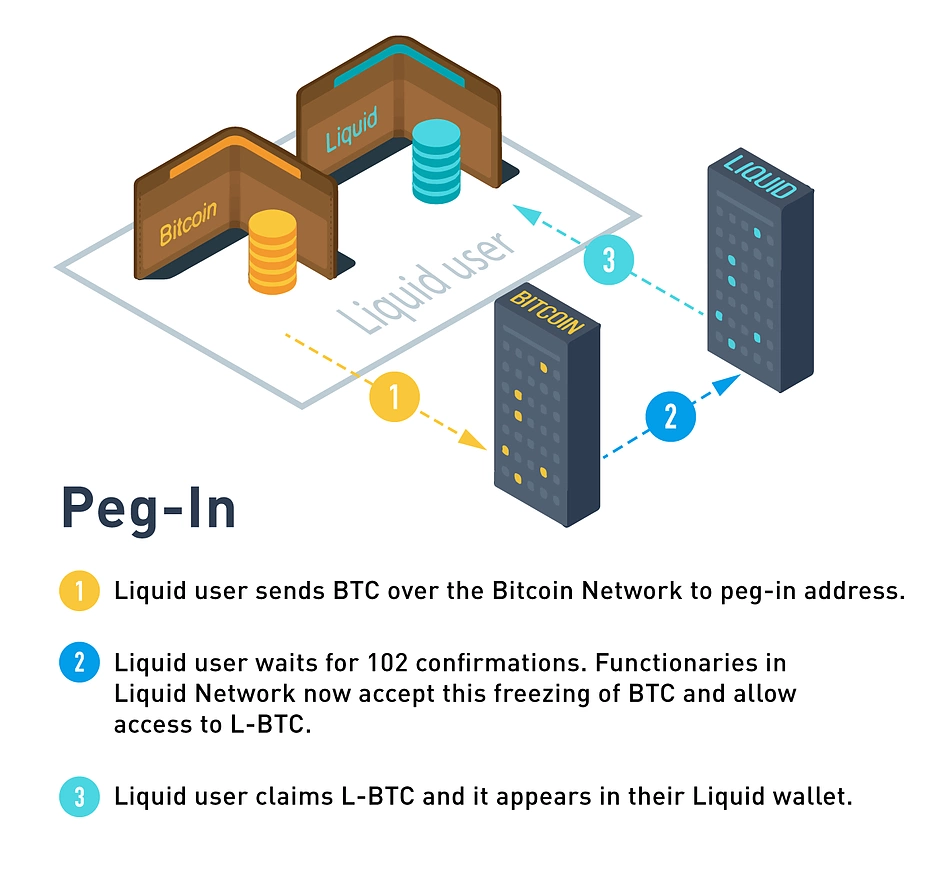
Wrapping Bitcoin involves locking BTC in a secure vault and issuing a pegged token on another blockchain, such as Ethereum. This wrapped version (e.g., WBTC) behaves like the original asset but can be used within smart contracts and decentralized applications that do not natively support Bitcoin.
How much is wrapped bitcoin worth?
Wrapped Bitcoin is designed to maintain a 1:1 peg with the price of native Bitcoin. Its value tracks the live market price of BTC, fluctuating in real-time alongside the primary asset. For current pricing data, see the live market chart below.
No comments yet. Be the first to share your thoughts!