
Bitcoin L2 Scaling in 2026
The narrative for Bitcoin rollups has shifted from experimental testnets to production-grade infrastructure. In 2026, the focus is no longer on proving that Bitcoin can support Layer 2 (L2) solutions, but on scaling throughput without sacrificing the security guarantees that define the main chain. This transition addresses the historical bottleneck where high demand on the base layer leads to congestion and elevated transaction fees.
Market analysts note that 2026 is characterized by consolidation and institutional adoption rather than speculative hype. As liquidity shifts toward more robust onchain innovations, Bitcoin L2s are becoming the primary vehicle for this institutional money. The goal is to create a scalable ecosystem that can handle enterprise-grade transaction volumes while maintaining the decentralized integrity of the Bitcoin network.
To contextualize the current market activity alongside these development milestones, it is useful to observe the broader price action and volume trends of Bitcoin itself.
The integration of these L2 solutions is driving a new phase of crypto markets. As noted by industry observers, the current cycle is defined by real compliance and the maturation of underlying technology. Bitcoin rollups are central to this evolution, offering a path to higher throughput that complements the security of the base layer rather than competing with it.
Rollup Technology Mechanics
Bitcoin rollups operate as execution layers that sit atop the base layer, bundling hundreds of transactions into a single cryptographic proof or batch before submitting it to the main chain. This architecture allows the network to process far more transactions than the base layer could handle alone, while the security guarantees remain anchored to Bitcoin’s consensus. Instead of every user verifying the entire history of the network, rollups verify only the validity or validity-proof of the bundled state.
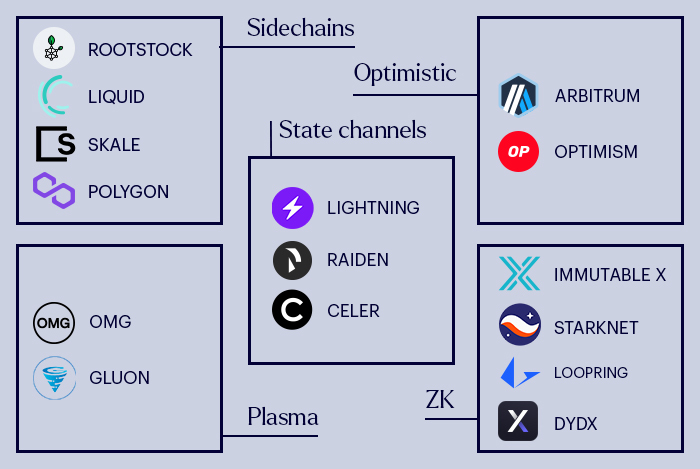
There are two primary approaches to this: optimistic rollups and zero-knowledge (ZK) rollups. The distinction lies in how they prove that the transactions are valid.
Optimistic Rollups
Optimistic rollups assume that all submitted transactions are valid by default. They do not immediately compute complex proofs for every batch. Instead, they post the transaction data on-chain and allow a "challenge period"—typically seven days—during which anyone can dispute a fraudulent state transition. If a fraud proof is submitted and verified, the invalid state is reverted, and the challenger is rewarded.
This method is computationally efficient for the rollup operator because it avoids the heavy lifting of generating complex proofs for every transaction. However, it introduces a delay for users who want to withdraw their funds from the rollup to the mainnet, as they must wait out the challenge window to ensure the state is final.
Zero-Knowledge Rollups
Zero-knowledge rollups take a different approach by generating a cryptographic proof (a zk-SNARK or zk-STARK) for every batch of transactions before submitting it to Bitcoin. This proof mathematically guarantees that all transactions in the batch are valid according to the rollup’s rules. Because the proof is verified on-chain, users can withdraw their funds immediately without waiting for a challenge period.
The trade-off is computational intensity. Generating these proofs requires significant processing power, which can make the rollup operator’s costs higher per transaction. However, as proof generation technology advances, this gap is narrowing, making ZK rollups increasingly attractive for their speed and finality.
Both models aim to solve the same problem: scaling Bitcoin without compromising its decentralized security. Optimistic rollups prioritize lower immediate costs and simpler implementation, while zero-knowledge rollups prioritize faster withdrawals and stronger cryptographic guarantees. The choice between them often depends on the specific use case, whether it’s high-frequency trading requiring instant finality or low-cost storage that can tolerate withdrawal delays.
Comparing Top Bitcoin L2 Protocols
As the Bitcoin rollup ecosystem matures in 2026, distinguishing between competing Layer 2 solutions requires looking beyond hype. The market has shifted from speculative experimentation to evaluating concrete metrics: total value locked (TVL), transaction throughput, and the specific security guarantees each protocol offers. While Bitcoin itself remains the settlement layer, these L2s are where the actual utility and yield generation occur.
According to DeFiLlama data tracked by Eco, the total value secured across the BTCfi category sits in the tens of billions of USD as of May 2026, though figures vary depending on how restaking mechanisms are counted. This capital is distributed unevenly among protocols, each optimizing for a different balance of decentralization, speed, and compatibility.
The following comparison highlights the leading Bitcoin rollup projects based on their current architectural approach and market position.
Security and Throughput Trade-offs
The choice of protocol often depends on whether the user prioritizes security or speed. Babylon, for instance, has captured significant TVL by allowing Bitcoin holders to stake their assets to secure other proof-of-stake networks, effectively monetizing dormant BTC. This model offers a different security paradigm compared to Stacks, which uses Proof-of-Transfer to tie its block production directly to Bitcoin mining hash rate.
For users focused on transactional utility rather than yield, the Lightning Network remains the dominant solution for payments. While it does not lock TVL in the traditional sense, its liquidity depth supports millions of daily transactions with near-zero fees. Meanwhile, Rootstock continues to serve as a bridge for developers wanting to deploy Ethereum-compatible smart contracts directly on Bitcoin, albeit with a more centralized federated security model.
Evaluating Market Position
TVL is a useful but imperfect metric for comparing these protocols. High TVL in Babylon reflects capital efficiency for stakers, while high liquidity in Lightning reflects network utility. Stacks and Rootstock show more traditional DeFi TVL patterns, driven by lending and liquidity provision.
As the 2026 landscape evolves, the distinction between "rollups" and "sidechains" may blur, but the underlying security models will remain the primary differentiator. Investors and developers should evaluate these protocols not just on current capitalization, but on their long-term alignment with Bitcoin's core ethos of security and decentralization.
BTC Throughput and Network Impact
Bitcoin rollups are shifting the network’s workload. By processing transactions off-chain and settling only the compressed proofs on the mainnet, they reduce the data burden on Bitcoin nodes. This design allows the base layer to maintain its security guarantees while handling a higher volume of user activity. The result is a more efficient network where throughput scales without compromising the integrity of the ledger.
Increased L2 activity directly alleviates mainnet congestion. When users transact on rollups like Merlin Chain or B², they are not competing for block space on Bitcoin. This separation means that mainnet fees for standard transactions—such as sending BTC or interacting with native smart contracts—remain stable even as L2 usage surges. The network behaves like a highway with dedicated express lanes; the main lanes stay clear for through traffic, while the express lanes handle the bulk of the volume.
This structural shift benefits all participants. Users enjoy faster confirmation times and lower costs on L2s, while the Bitcoin network itself sees reduced strain on its limited block space. As more applications migrate to rollups, the mainnet becomes a settlement layer focused on finality and security, rather than a congested transaction processor. This evolution supports Bitcoin’s long-term viability as a global settlement layer.
Bitcoin L2 Adoption Trends
Institutional capital is shifting from passive holding to active yield generation on Bitcoin Layer 2 networks. By mid-2026, the narrative has moved beyond speculative hype toward consolidation and compliance, driven by public institutions seeking regulated exposure to Bitcoin’s yield potential. This transition marks a maturation of the ecosystem, where security and regulatory clarity take precedence over raw speed.
The growth of wrapped BTC and Bitcoin Finance (BTCfi) protocols illustrates this shift. According to Eco’s analysis of DeFiLlama data, total value secured in BTCfi categories reached tens of billions of dollars by May 2026, depending on how restaking mechanisms are counted. This capital accumulation signals that major players are comfortable deploying significant assets into L2 environments, trusting the underlying rollup architecture to maintain Bitcoin’s security guarantees.
Pantera Capital’s 2026 outlook reinforces this trend, predicting that the year will be defined by institutional money entering the space through compliant channels. As Bitcoin rollups offer scalable throughput without sacrificing the base layer’s security, they become the preferred infrastructure for these large-scale deployments. The result is a more robust, yield-generating Bitcoin economy that operates parallel to the main chain.
No comments yet. Be the first to share your thoughts!