
The 2026 Bitcoin L2 landscape
Bitcoin Layer 2 development has moved beyond experimental testnets into a phase of production-ready rollup architectures. The infrastructure shift is no longer theoretical; it is defined by the deployment of sequencers, data availability layers, and interoperability bridges that prioritize finality and security over speculative speed.
The current landscape is characterized by a divergence between optimistic rollups and validity-based solutions. Optimistic rollups, which assume transactions are valid unless proven otherwise, continue to dominate user-facing applications due to lower data costs. However, the 2026 cycle has seen a notable increase in zk-rollup adoption, driven by improvements in proof generation speeds and the maturation of zero-knowledge cryptography. This shift addresses the long-standing concern of withdrawal delays inherent in optimistic models.
Liquidity fragmentation remains the primary structural challenge. While the number of active L2 networks has grown, capital is increasingly consolidating around protocols that offer the deepest liquidity and lowest transaction fees. This consolidation is forcing newer entrants to differentiate through specialized features, such as native privacy or account abstraction, rather than competing on general-purpose scalability alone.
The macroeconomic environment has also influenced L2 development priorities. With Bitcoin's price action setting the tone for broader crypto markets, L2 projects are focusing on sustainable revenue models rather than pure user acquisition. This includes fee market optimizations and partnerships with traditional finance entities seeking on-chain exposure. The result is a more resilient, though less chaotic, ecosystem.
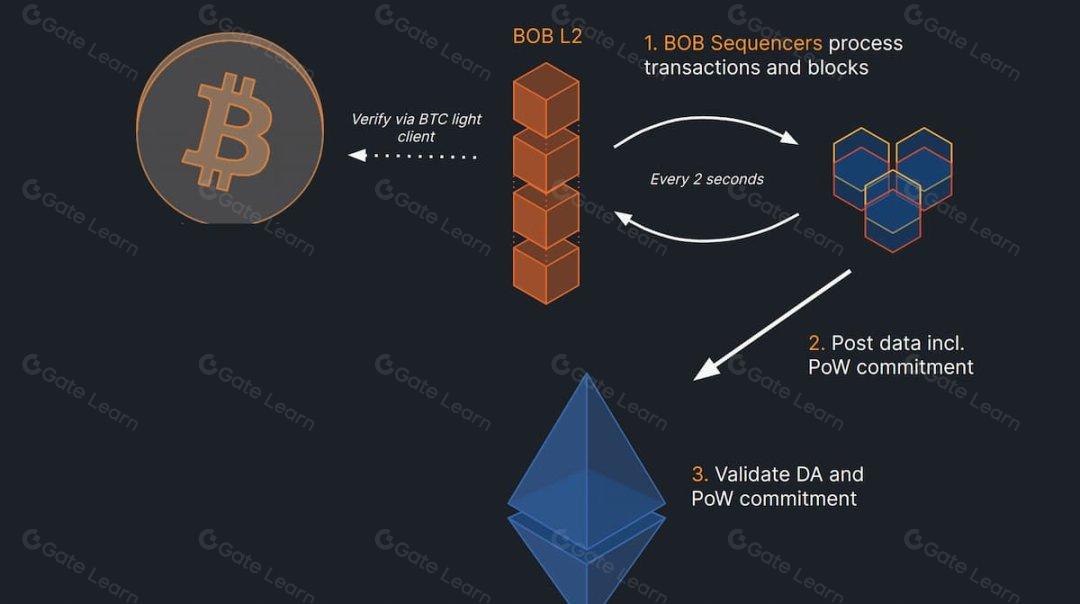
This maturation is evident in the technical infrastructure supporting these networks. The reliance on centralized sequencers is gradually decreasing as decentralized alternatives gain traction, reducing single points of failure. Simultaneously, data availability solutions like EigenLayer and Celestia are providing the bandwidth necessary to support higher transaction throughput without compromising Bitcoin's base layer security.
As we move deeper into 2026, the distinction between Bitcoin L1 and L2 is becoming less about isolation and more about symbiosis. L2s are increasingly viewed not as competitors to Bitcoin's security model, but as essential extensions that unlock its utility for everyday transactions and complex financial applications.
Rollup architectures gaining traction
Bitcoin scaling relies on three primary rollup architectures: Optimistic, Zero-Knowledge (ZK), and hybrid models. Each approach balances the trade-off between computational efficiency and security assumptions differently. As the industry moves toward 2026, the choice of architecture dictates how quickly transactions settle and how much trust is required from users.
Optimistic Rollups
Optimistic rollups assume transactions are valid by default and only require verification if a fraud proof is submitted. This method offers higher throughput and lower upfront computational costs because it does not need complex cryptographic proofs for every block. However, it introduces a challenge period, typically 7 days, before funds can be withdrawn to the main chain. This delay is the primary friction point for users seeking instant finality.
Zero-Knowledge (ZK) Rollups
ZK rollups generate a cryptographic proof for every batch of transactions, which is verified on-chain before acceptance. This eliminates the withdrawal delay inherent in optimistic models, providing immediate finality. The trade-off is higher computational overhead, as generating these proofs requires significant processing power. As hardware and algorithmic efficiency improve, ZK rollups are becoming increasingly viable for high-frequency Bitcoin applications.
Hybrid Approaches
Hybrid architectures attempt to combine the speed of ZK proofs with the cost-efficiency of optimistic verification. Some protocols use ZK proofs for internal state transitions while relying on optimistic challenges for cross-chain interoperability. This layered approach aims to minimize latency while maintaining robust security guarantees, though it adds complexity to the software stack.
Comparison of Leading Approaches
The following table outlines the key technical distinctions between these architectures as they are deployed for Bitcoin scaling.
| Architecture | Verification Method | Withdrawal Finality | Relative Cost |
|---|---|---|---|
| Optimistic | Fraud Proofs | 7 Days | Low |
| ZK Rollup | Validity Proofs | Immediate | High |
| Hybrid | Mixed | Short | Medium |
These architectural choices directly impact the user experience and capital efficiency of Bitcoin Layer 2 solutions. As regulatory clarity improves in 2026, institutional adoption will likely favor architectures that offer both speed and verifiable security, pushing the industry toward more sophisticated hybrid or ZK-based systems.
DeFi liquidity and institutional adoption
Bitcoin rollups are shifting the narrative from speculative trading to functional infrastructure. By offloading transaction processing from the base layer, these rollups provide the throughput and low-latency settlement required for serious financial applications. This architectural shift allows decentralized finance protocols to operate with the reliability and speed that traditional markets expect, removing the friction that has historically limited Bitcoin's utility beyond simple value storage.
The improved economics of rollup-based settlement directly impact liquidity depth. Lower fees enable high-frequency trading strategies and complex derivatives that were previously cost-prohibitive on the main chain. As these primitives mature, they create a more robust ecosystem for institutional capital. Major financial players are increasingly viewing Bitcoin not just as a digital commodity, but as a programmable settlement layer capable of supporting sophisticated financial instruments.
Market indicators suggest this transition is accelerating. Pantera Capital notes in their 2026 outlook that the broader crypto market has consolidated, with capital increasingly flowing into established, utility-driven assets rather than speculative tokens. This consolidation favors Bitcoin's infrastructure upgrades, as institutions prioritize security and scalability over experimental features. The focus is shifting toward building sustainable, high-volume financial networks.
Regulatory Clarity and Market Risks
The regulatory landscape for Bitcoin Layer 2s is shifting from ambiguity toward structured oversight, a transition that defines the risk profile for 2026. As noted in the Bitcoin Suisse Outlook 2026, clearer regulation and expanding institutional access are beginning to form the groundwork for industry stability. This regulatory clarity reduces the existential threat of sudden bans but introduces new compliance burdens for rollup operators.
Compliance challenges remain the primary headwind. Bitcoin L2s must navigate a fragmented global environment where the United States, European Union, and Asia-Pacific regions apply differing definitions of security and commodity status. For operators, this means building infrastructure that can adapt to varying KYC/AML requirements across jurisdictions without compromising the base layer’s censorship resistance. The cost of legal infrastructure is rising, favoring well-capitalized teams over experimental projects.
Market risks are equally pronounced. Following the 2025 highs, Bitcoin has entered a larger corrective structure, with some analysts suggesting potential volatility before the next bull run. This macro uncertainty directly impacts L2 adoption; when Bitcoin’s price stagnates or declines, transaction fees on the main chain drop, reducing the immediate economic incentive for users to migrate to L2s for cost savings.
The interplay between regulatory pressure and market sentiment creates a narrow window for L2 growth. Success in 2026 will depend not just on technical throughput, but on an operator’s ability to maintain compliance while navigating a potentially subdued crypto market. Investors should view regulatory adherence as a core metric of L2 viability, alongside TVL and active addresses.
Bitcoin rollup scaling: what to check next
Bitcoin L2s use rollup technology to bundle transactions off-chain, settling only proofs on the main chain. This approach significantly increases throughput while inheriting Bitcoin’s security model, making it the primary scaling infrastructure for 2026.
No comments yet. Be the first to share your thoughts!