

Bitcoin’s scalability bottleneck has long been a talking point, but 2025 is shaping up to be the year that changes everything. With BTC trading at $87,490.00, market participants are watching as zero-knowledge Bitcoin rollups (zkBTC rollups) move from theory to practical infrastructure. The result? A genuine path toward sub-second, low-fee transactions and cross-chain interoperability, without sacrificing Bitcoin’s core security.
Why Scalability Still Matters at $87,490
Even as Bitcoin’s price hovers near all-time highs, the network’s throughput remains limited by its original design, roughly 7 transactions per second (TPS). This restriction has become more pronounced as institutional interest and DeFi applications expand. Recent sources highlight that ZK Technologies’ token surged to $0.085–$0.090 in late 2025, directly tied to zk rollup innovation and growing institutional adoption. The market is signaling its belief: scalable infrastructure is no longer optional for Bitcoin’s next chapter.
The emergence of zkBTC rollups offers a disciplined approach to scaling, aggregating thousands of off-chain transactions into a single on-chain batch, validated by succinct zero-knowledge proofs. This not only slashes data load and fees but also preserves Bitcoin’s security model, a non-negotiable for serious investors and developers alike.
The zkBTC Roadmap: From Testnet to Trustless Bridges
The development of zkBTC rollups is structured around a phased roadmap designed for reliability and gradual enhancement:
- Phase 0: Infrastructure partnerships and zkBTC testnet launch.
- Phase 1: Mainnet v1 deployment, Ethereum integration, wrapped BTC (wBTC) as gas token.
- Phase 2: Mainnet v2 upgrade with additional gas tokens and trustless native bridges for BTC assets.
- Phase 3: Mainnet v3 rollout, fully trustless bridges for native BTC and other Bitcoin-based assets.
This disciplined progression ensures each upgrade builds on proven security guarantees while expanding utility and throughput. For developers building on or integrating with Bitcoin, these milestones mean actionable opportunities to deliver new products without being constrained by L1 bottlenecks.
ZK Rollup Tech: Why It Works Better on Bitcoin Than Ethereum
A key insight from recent research is that ZK rollups are arguably more effective on Bitcoin than even on Ethereum. While Ethereum pioneered the mainstream adoption of ZK rollups for scaling, Bitcoin’s UTXO model enables more straightforward aggregation of transaction proofs with lower data overhead per batch. According to sCrypt’s technical analysis, early implementations have demonstrated higher scalability potential on Bitcoin thanks to this leaner structure.
This advantage is now being realized in live deployments: projects like BitVM2 are introducing practical native security guarantees for zkBTC rollups, addressing pain points such as custody risk and slow withdrawal times that have hampered previous Layer 2 solutions. The result? More secure bridges between mainnet BTC and Layer 2s, critical for both retail users seeking cheap transfers and institutions requiring robust compliance frameworks.
Bitcoin (BTC) Price Prediction Post-zkBTC Rollup Era (2026–2031)
Forecasting BTC value as zkBTC rollups transform scalability, fees, and adoption (2026–2031)
| Year | Minimum Price (Bearish Scenario) | Average Price (Base Case) | Maximum Price (Bullish Scenario) | Annual Change (%) | Key Scenario Insights |
|---|---|---|---|---|---|
| 2026 | $72,000 | $95,000 | $120,000 | +8.6% (avg) | Early zkBTC adoption phase, volatility as scaling proves itself |
| 2027 | $78,000 | $110,000 | $140,000 | +15.8% (avg) | Layer 2 and DeFi integration grows, increased institutional use |
| 2028 | $83,000 | $128,000 | $170,000 | +16.4% (avg) | Wider zkBTC/DeFi ecosystem, more mainstream usage |
| 2029 | $92,000 | $146,000 | $200,000 | +14.1% (avg) | Strong cross-chain interoperability, regulatory clarity improves |
| 2030 | $105,000 | $160,000 | $235,000 | +9.6% (avg) | Bitcoin as programmable money, global adoption accelerates |
| 2031 | $115,000 | $185,000 | $275,000 | +15.6% (avg) | Mature zkBTC ecosystem, Bitcoin as primary settlement layer |
Price Prediction Summary
Bitcoin’s price trajectory from 2026 to 2031 is set to benefit from the transformative impact of zkBTC rollups, which dramatically enhance scalability, reduce fees, and enable new DeFi applications. The average price is projected to steadily increase, with bullish scenarios potentially more likely if institutional and retail adoption accelerates. Bearish scenarios reflect potential setbacks from regulatory hurdles or slower-than-expected adoption, but the strong technical foundation provided by zkBTC significantly improves Bitcoin’s long-term outlook.
Key Factors Affecting Bitcoin Price
- Adoption and success of zkBTC rollups and Layer 2 solutions
- Global regulatory developments and institutional participation
- Integration with DeFi and cross-chain protocols
- Bitcoin halving cycles and supply dynamics
- Competition from alternative scalable blockchains
- Macro-economic factors and global financial trends
- Security and trust in zkBTC bridges and interoperability protocols
Disclaimer: Cryptocurrency price predictions are speculative and based on current market analysis. Actual prices may vary significantly due to market volatility, regulatory changes, and other factors. Always do your own research before making investment decisions.
As zkBTC rollups move through their roadmap phases, the broader impact on Bitcoin’s ecosystem is coming into sharper focus. The integration of trustless bridges and native BTC support is laying the groundwork for a Bitcoin-native DeFi environment. This isn’t just theory, multiple projects are already leveraging zkBTC infrastructure to enable lending, swaps, and yield strategies directly secured by Bitcoin’s L1 consensus.
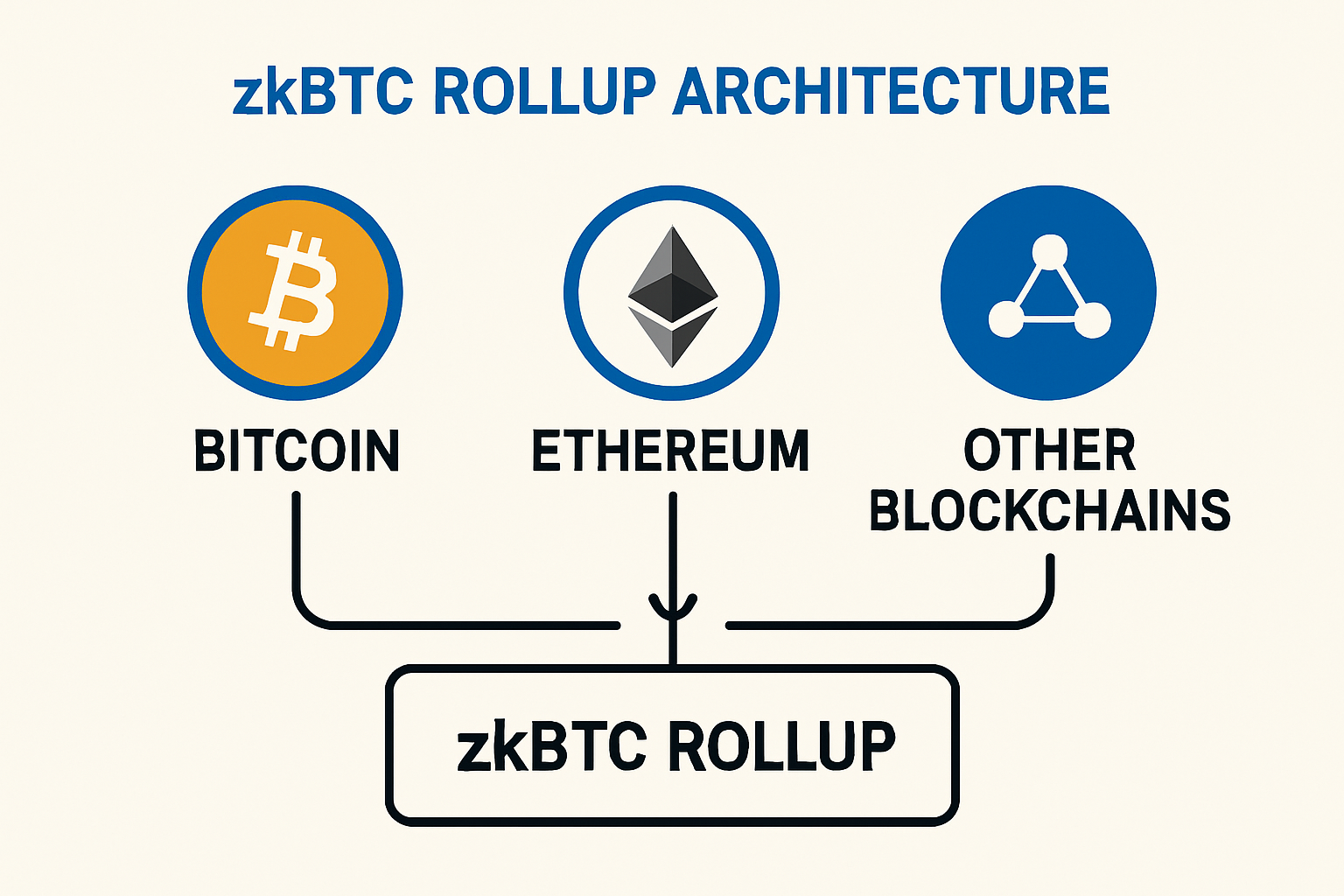
What stands out in 2025 is the growing interoperability between Bitcoin and other major blockchains. With zkBTC rollups now supporting wrapped assets and cross-chain messaging, users can move value seamlessly between ecosystems without relying on custodial solutions or centralized exchanges. This opens the door for arbitrage opportunities, composable DeFi products, and new forms of programmable money, all while fees remain a fraction of what they were on legacy L1 transactions.
Institutional Adoption: The Next Growth Catalyst
Institutions are increasingly allocating to BTC as an inflation hedge and alternative asset. However, their appetite for deeper involvement has been stymied by slow settlement times and high transaction costs, issues directly addressed by zkBTC rollup protocols. As Bitcoin trades at $87,490.00, financial desks are piloting settlement flows over zkBTC-powered L2s to achieve near-instant finality with auditability that matches traditional rails.
This shift is visible in both token markets and infrastructure investment: ZK Technologies’ price rally to $0.085–$0.090 underscores how capital is flowing into projects that solve real bottlenecks in Bitcoin scalability. Expect continued momentum as institutional players demand more efficient rails for both spot trading and derivatives settlement.
Actionable Opportunities for Developers and Investors
The maturation of zero-knowledge proofs on Bitcoin isn’t just a technical milestone, it’s a call to action for builders and investors alike:
- Developers: Begin prototyping cross-chain apps using zkBTC’s APIs and trustless bridge infrastructure; early movers will be best positioned as liquidity migrates to scalable L2s.
- Traders: Monitor fee dynamics between mainnet BTC and zkBTC-based DEXs; volatility around network upgrades could create unique arbitrage windows.
- Long-term investors: Track adoption metrics of native BTC bridges, a surge here could signal when Layer 2 value accrual overtakes traditional custodial solutions.
If you’re looking to deepen your technical understanding or explore hands-on guides for building with zero-knowledge proofs on Bitcoin, see our detailed resource: How Zero-Knowledge Rollups Enhance Bitcoin Scalability: Technical Deep Dive.
What Comes Next?
The pace of innovation around zkBTC rollups shows no sign of slowing down. As trustless bridges mature, expect a new wave of applications, from decentralized identity anchored on Bitcoin to high-frequency trading protocols, that were previously impossible due to throughput limits. The strategic focus now shifts from theoretical scaling debates toward disciplined execution: secure deployments, robust audits, and sustainable fee models are all critical as adoption accelerates.
The market’s conviction is clear: scalable infrastructure isn’t just desirable, it’s essential if Bitcoin is to maintain relevance at its current valuation levels. For those willing to adapt quickly, the next twelve months will present some of the most actionable opportunities in crypto since the original Lightning Network rollout.




No comments yet. Be the first to share your thoughts!