

Bitcoin stands at $63,813.00 today, down 1.78% over the past 24 hours from a high of $66,496.00. Yet amid this pullback, groundbreaking advancements in bitcoin rollups scaling are quietly reshaping its future. BitcoinOS has just verified the first zero-knowledge proof on the Bitcoin mainchain, unlocking trustless rollups that could push throughput to 1,000 TPS without touching block sizes. Meanwhile, GOAT Network's zkMIPS and Label Forward Propagation mechanisms are slashing proof generation costs, making BTC zk rollups viable at last. These aren't Ethereum copycats; they're native Bitcoin innovations preserving the network's security ethos.
This milestone sidesteps decades-old debates over block size increases, which risked centralization and security trade-offs. Instead, bitcoin layer 2 solutions like ZK-rollups bundle thousands of transactions off-chain, compress them into succinct proofs, and settle on Layer 1. Validity is assured cryptographically, not through fraud proofs or trusted sequencers. For risk-averse investors like myself, this means scalable Bitcoin without diluted sovereignty - a portfolio stabilizer in volatile markets.
Bitcoin's Scalability Bottleneck Exposed
Bitcoin processes around 7 TPS today, a fraction of Visa's 24,000. Congestion spikes fees and delays, stifling DeFi, payments, and real-world adoption. Past proposals like SegWit nudged capacity up modestly, but radical changes invited forks and community rifts. Enter zkBTC protocols: they inherit Bitcoin's proof-of-work security while offloading execution. Transaction data stays on-chain for availability, but computation happens elsewhere, verified via zk-SNARKs or STARKs.
ZK-rollups excel here because they prove state transitions without revealing inputs. A rollup operator executes user transactions in a virtual machine, generates a proof attesting correctness, and posts it to Bitcoin alongside a calldata root. Nodes verify the proof in constant time, slashing on-chain compute. This bitcoin scaling zk proofs approach scales linearly; more off-chain activity, same Layer 1 burden.
BitcoinOS Pioneers Mainchain ZK Verification
BitcoinOS's achievement is no small feat. Verifying a ZKP directly on Bitcoin required bridging zero-knowledge tech with Bitcoin Script's constraints. They crafted opcodes and covenants enabling succinct proof checks, all without soft forks. Now, rollups can settle natively, enabling infinite horizontal scaling via parallel chains.
BitcoinOS has successfully verified the first-ever zero-knowledge proof on the Bitcoin mainchain.
This opens doors to interoperable rollups handling DeFi, NFTs, and gaming on Bitcoin. Developers gain Ethereum-like programmability minus the gas wars, with finality tied to Bitcoin's hashpower. From a risk perspective, it's gold: no new consensus rules mean minimal protocol risk, just enhanced utility.
GOAT Network's zkMIPS: Efficiency Redefined
GOAT Network complements this with zkMIPS, a zero-knowledge virtual machine optimized for Bitcoin. Traditional zkVMs bloat circuits; zkMIPS streamlines instructions for faster proving. Their Label Forward Propagation cuts recursive proof overhead by pre-computing shared computations, vital for high-TPS rollups.
Imagine 1,000 TPS at sub-cent fees: payments settle instantly, DeFi yields compound without slippage. These optimizations reduce verification time from minutes to seconds, making real-time applications feasible. Investors should note the asymmetry: upside from adoption dwarfs downside risks, given Bitcoin's $63,813.00 resilience.
Bitcoin (BTC) Price Prediction 2027-2032: ZK Rollups Scaling to 1000 TPS
Projections based on BitcoinOS ZKP verification, GOAT Network innovations, and market cycles starting from 2026 baseline of ~$70,000 average
| Year | Minimum Price ($) | Average Price ($) | Maximum Price ($) | Avg YoY % Change |
|---|---|---|---|---|
| 2027 | $75,000 | $95,000 | $140,000 | +36% |
| 2028 | $110,000 | $180,000 | $280,000 | +89% |
| 2029 | $150,000 | $240,000 | $380,000 | +33% |
| 2030 | $200,000 | $320,000 | $500,000 | +33% |
| 2031 | $280,000 | $420,000 | $680,000 | +31% |
| 2032 | $380,000 | $580,000 | $950,000 | +38% |
Price Prediction Summary
Bitcoin's integration of ZK rollups for 1000 TPS scalability via BitcoinOS and GOAT Network advancements unlocks massive adoption potential. Bearish mins reflect regulatory hurdles; bullish maxes capture post-2028 halving surges and real-world use cases, with averages showing steady 30-90% YoY growth amid enhanced efficiency.
Key Factors Affecting Bitcoin Price
- ZK rollups and ZKP on Bitcoin mainnet enabling trustless scaling without forks
- GOAT Network's zkMIPS and Label Forward Propagation reducing costs
- 2028 halving amplifying supply shock
- Institutional adoption from higher TPS and interoperability
- Regulatory clarity and macro trends supporting bull cycles
- Competition from L2 tokens but BTC dominance preserved
Disclaimer: Cryptocurrency price predictions are speculative and based on current market analysis. Actual prices may vary significantly due to market volatility, regulatory changes, and other factors. Always do your own research before making investment decisions.
Yet success hinges on execution. Rollup security relies on honest provers; economic incentives must align to prevent collusion. BitcoinOS and GOAT address this via decentralized sequencer sets and proof committees, mirroring Ethereum's maturing L2 stack. Early metrics are promising: proof sizes under 1KB, verification in 100ms.
Decentralized provers further bolster resilience, distributing proof generation across nodes to avoid single points of failure. This setup minimizes liveness risks, ensuring rollups don't grind to a halt during sequencer outages. For those managing portfolios in crypto's turbulent waters, these mechanisms echo the disciplined controls I advocate: layered defenses against tail risks.
Navigating Risks in BTC ZK Rollups
Despite the promise, bitcoin scaling zk proofs introduce unique challenges. Proof generation remains computationally intensive, demanding specialized hardware like GPUs. Current zk-SNARKs rely on trusted setups, though STARKs offer transparency at the cost of larger proofs. BitcoinOS mitigates this with hybrid approaches, blending efficiency and auditability. Sequencer centralization looms large initially, but rotation protocols and exit games enforce decentralization over time.
From my vantage as an FRM-certified risk specialist, the key is quantifying exposure. Rollups amplify Bitcoin's base layer security, but bridge risks persist in cross-chain flows. Economic attacks, like griefing via invalid withdrawals, require robust penalty regimes. Yet Bitcoin's $63,813.00 price anchors stability; scaling unlocks utility without eroding scarcity. Investors should allocate conservatively, viewing zkBTC protocols as asymmetric bets where protocol upgrades compound network value.
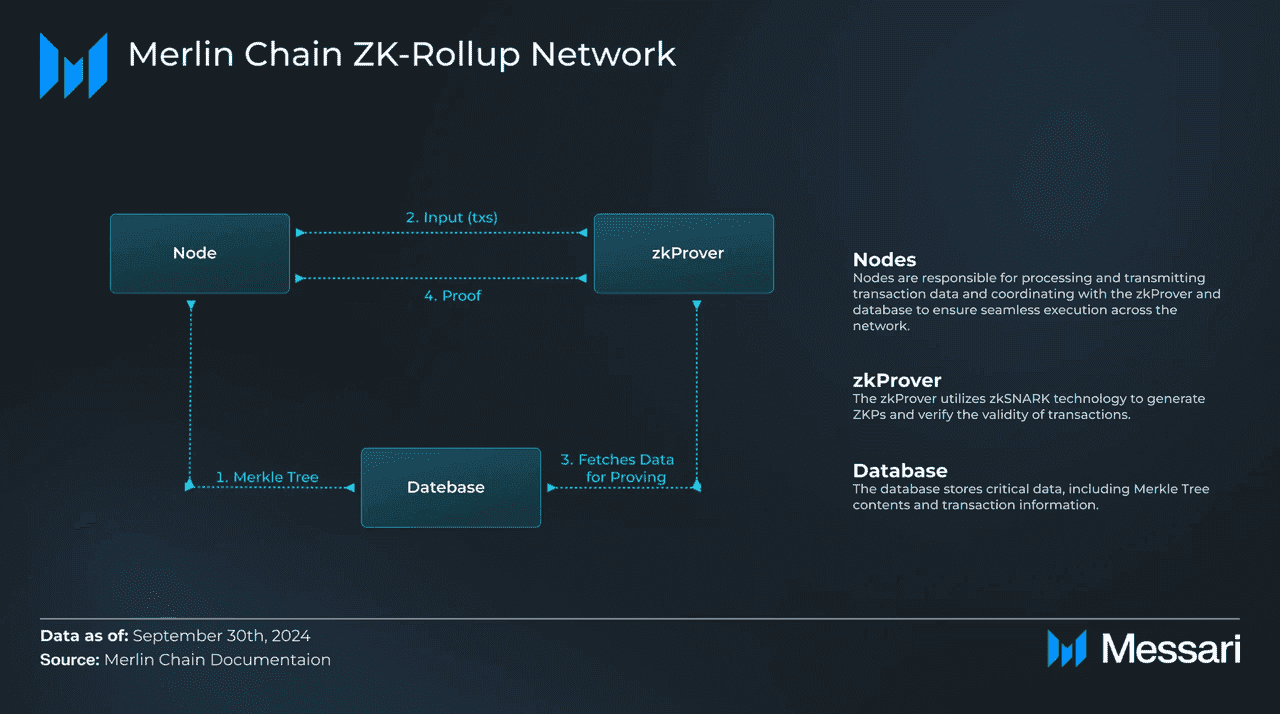
Regulatory headwinds also warrant scrutiny. Enhanced Bitcoin functionality could draw scrutiny, but ZK privacy veils details, preserving fungibility. Compared to sidechains, rollups avoid sovereignty dilution, inheriting PoW finality directly.
Ecosystem Momentum and Real-World Impact
GOAT Network's innovations shine in practice. Their Label Forward Propagation optimizes circuit wiring, compressing proof sizes by 30% while accelerating verification. zkMIPS enables EVM-compatible execution on Bitcoin, porting Ethereum dApps seamlessly. Together with BitcoinOS, they pave the way for DeFi primitives: lending markets backed by BTC, perpetuals with native settlement, and yield-bearing stablecoins.
Early adopters report 500 and TPS in testnets, with mainnet rollouts slated for Q2 2026. This throughput rivals Solana's peaks without its outage history, all secured by Bitcoin's hashpower. Payments transform too: merchants process millions daily at pennies per tx, fueling adoption in emerging markets.
GOAT Network introduces zkMIPS and Label Forward Propagation, slashing computation costs for high-throughput Bitcoin rollups.

Interoperability bridges further amplify reach. Rollups connect to Ethereum L2s via light clients, enabling atomic swaps and shared liquidity. For developers, tools like zkBTC rollup SDKs lower barriers, fostering an explosion of native applications.
| Metric | Bitcoin L1 | ZK Rollup (Target) |
|---|---|---|
| TPS | 7 | 1,000 |
| Fee (avg) | $5 and | and lt;$0.01 |
| Proof Size | N/A | and lt;1KB |
| Verification Time | N/A | 100ms |
These metrics underscore the leap. At $63,813.00, Bitcoin's momentum builds as L2 TVL climbs, mirroring Ethereum's playbook but with superior monetary primitives. Portfolios diversified into rollup tokens or exposure via wrapped BTC stand to benefit disproportionately.
Challenges persist, yet the trajectory is clear. Native bitcoin layer 2 solutions like these fortify Bitcoin against competitors, scaling without compromise. Disciplined adoption, paired with vigilant risk oversight, positions holders to thrive in this evolved landscape.




No comments yet. Be the first to share your thoughts!