

In the evolving landscape of Bitcoin scaling, Citrea's BTC rollup fees tracker has emerged as a pivotal tool, revealing that 0.161 BTC has been paid to miners since block 925165. At Bitcoin's current price of $69,596.00, this translates to roughly $11,200 in real economic value funneled directly into the Bitcoin network's security budget. This milestone underscores the tangible contributions of Citrea BTC rollup technology, not just in scaling transactions but in bolstering miner incentives at a time when block subsidies are inexorably declining.
Citrea, positioning itself as Bitcoin's first ZK rollup, leverages zero-knowledge proofs to batch thousands of transactions off-chain while anchoring everything back to Bitcoin's base layer for data availability. Unlike traditional Layer 2 solutions that rely on alternative chains, Citrea posts concise state differences - or state diffs - plus validity proofs directly onto Bitcoin. This methodical approach minimizes block space usage while ensuring trustless settlement, making ZK rollup Bitcoin a reality without compromising the network's flagship security model.
Citrea BTC Rollup Fees: A Deep Dive into Miner Payments
The tracker's data, shared via a simple yet insightful site by the Citrea team, captures cumulative Bitcoin rollup fees from the project's inaugural rollup batch. Since block 925165, these Citrea miner payments have steadily accumulated, reflecting genuine user activity in lending BTC as collateral and stablecoin operations like U. S. dollar yields. What starts as modest data postings compounds into consistent revenue streams for miners, a critical factor as Bitcoin's halving cycles erode the 3.125 BTC block subsidy further with each epoch.
This consistent fee revenue for miners through data availability sets Citrea apart in the BTC rollups block 925165 narrative.
Consider the broader context: historical charts of Bitcoin fees as a percentage of total block rewards show fees hovering below 5% in low-congestion periods, spiking during bull runs or Ordinals frenzy. Citrea's 0.161 BTC, though nascent, injects predictability into this volatility. It's not speculative hype; it's verifiable on-chain activity proving that rollups can sustain miner economics without flooding blocks with full transaction data.

Launch Sparks Bitcoin Block Space Controversy
Citrea's mainnet activation on January 28,2026, backed by heavyweights like Founders Fund, immediately reignited debates on BitVM scaling Bitcoin paradigms. Proponents argue that non-payment use cases - such as ZK-rollups posting diffs for DeFi primitives - are essential to future-proof miner revenue. With Bitcoin trading at $69,596.00 and 24-hour gains of and $1,375.00, the network's market cap amplifies every satoshi's impact. Critics, however, contend block space should prioritize sovereign payments over what they term "rollup spam, " echoing tensions from past scaling wars.
This friction isn't abstract. As block subsidies dwindle toward zero post-2140, total transaction fees must rise to secure the chain. Citrea's model sidesteps calldata bloat by design: state diffs are lean, proofs are succinct, and settlement is atomic on Bitcoin. Early metrics suggest this could evolve into a multi-million dollar annual subsidy, dwarfing current rollup contributions while enabling BTC-native DeFi without bridges or custodians.
Measuring Economic Impact of Citrea's Rollup Activity
To quantify Citrea BTC rollup traction, cross-reference the tracker's 0.161 BTC against aggregate network fees. Blockchain explorers log daily fee totals in the low thousands of BTC during lulls, yet rollups like Citrea carve out a niche for high-throughput apps. At $69,596.00 per BTC, these fees equate to miners receiving payments equivalent to several high-end server racks' worth of electricity costs - a non-trivial offset in a post-subsidy era.
Adoption drivers include BTC-collateralized lending and dollar-denominated yields, drawing liquidity without diluting Bitcoin's monetary purity. The tracker's transparency fosters trust, allowing developers and investors to monitor Bitcoin rollup fees in real-time. As activity ramps - potentially with more ZK-rollups joining - we could see exponential growth, pressuring base layer fees upward in a virtuous cycle for network security.
Bitcoin (BTC) Price Prediction 2027-2032
Projections factoring in Citrea BTC Rollup fees (0.161 BTC paid to miners since block 925165) and sustained miner revenue growth amid halvings
| Year | Minimum Price | Average Price | Maximum Price | YoY % Change (Avg) |
|---|---|---|---|---|
| 2027 | $75,000 | $105,000 | $145,000 | +50% |
| 2028 | $110,000 | $170,000 | $260,000 | +62% |
| 2029 | $130,000 | $200,000 | $300,000 | +18% |
| 2030 | $150,000 | $240,000 | $360,000 | +20% |
| 2031 | $170,000 | $280,000 | $420,000 | +17% |
| 2032 | $220,000 | $360,000 | $550,000 | +29% |
Price Prediction Summary
Bitcoin's price is forecasted to experience strong growth from 2027 to 2032, propelled by rollup solutions like Citrea providing consistent miner fees (already $11,200 equivalent at current prices), halvings in 2028 and 2032, L2 adoption, and cyclical bull markets. Average prices are expected to climb from $105,000 in 2027 to $360,000 by 2032, with min/max reflecting bearish corrections and euphoric peaks.
Key Factors Affecting Bitcoin Price
- Citrea and Bitcoin rollup fees scaling miner revenue as block subsidies decline
- 2028 and 2032 halvings tightening supply
- Rising DeFi use cases (e.g., BTC lending) driving on-chain activity
- Favorable regulatory developments and institutional inflows
- Historical 4-year market cycles post-halving
- Macro tailwinds: lower interest rates, global adoption vs. competition
Disclaimer: Cryptocurrency price predictions are speculative and based on current market analysis. Actual prices may vary significantly due to market volatility, regulatory changes, and other factors. Always do your own research before making investment decisions.
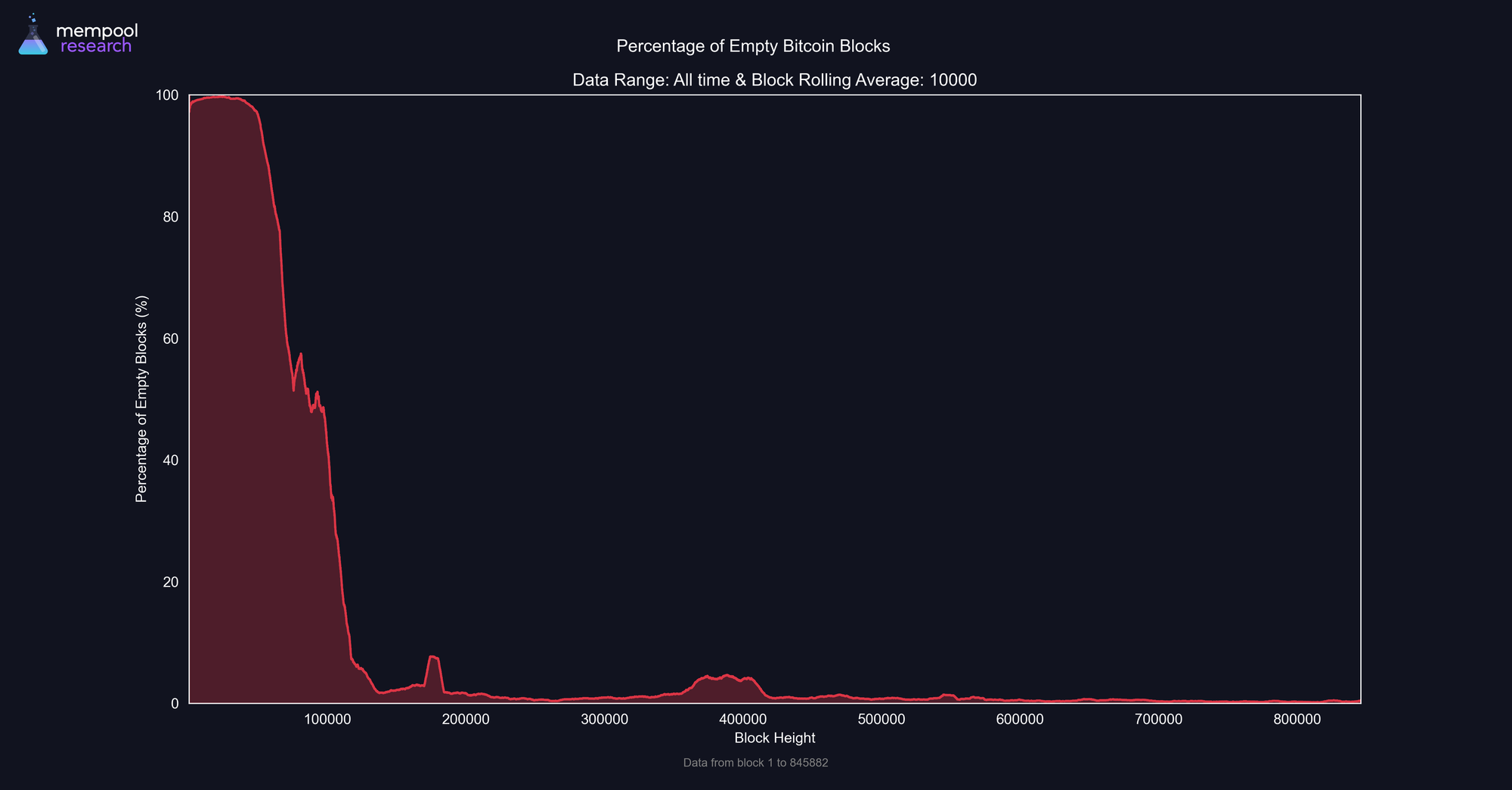
Delving deeper into Bitcoin's fee dynamics reveals why Citrea's contributions matter. Historical data from sources like Bitbo Charts illustrates fees comprising a volatile slice of block rewards, often dipping under 2% during quiet periods but surging past 20% amid network stress. With the current block subsidy at 3.125 BTC and declining, rollups introduce baseline revenue decoupled from payment volume spikes. Citrea's methodical state diff postings - compact updates to the rollup state rather than bloated calldata - exemplify efficient block space utilization, aligning with BitVM scaling Bitcoin principles for verifiable computation on Bitcoin.
This efficiency stems from Citrea's security model: Bitcoin serves as the data availability layer, where validity proofs cryptographically attest to off-chain execution correctness. No trusted sequencers or multi-sig committees; disputes resolve on Bitcoin via challenge periods inherent to ZK tech. Such design not only curbs ZK rollup Bitcoin risks but funnels fees predictably, countering subsidy halving pressures. At $69,596.00 per BTC, even incremental postings translate to miners covering operational margins, fostering long-term hash rate stability.
Debate Intensifies: Rollups vs. Payment Purists
Citrea's mainnet launch on January 28,2026, thrust these tensions into sharp relief. Backed by Founders Fund, it enables BTC-collateral lending and dollar yields, drawing DeFi liquidity natively. Enthusiasts hail it as a lifeline for miner economics; detractors decry it as encroaching on sacred block space reserved for monetary transfers. Yet data tempers the outrage: Citrea's footprint remains negligible against daily fee totals, which Blockchain. com charts in fluctuating BTC volumes excluding subsidies. This balance suggests symbiosis, not parasitism - rollups amplify utility, indirectly boosting base layer demand.

From a chartist's lens, patterns emerge in fee evolution. Post-halving cycles correlate with fee volatility spikes, akin to forex liquidity squeezes. Citrea injects a steady baseline, potentially smoothing these oscillations much like algorithmic stabilizers in trading. Projecting forward, if adoption mirrors Ethereum rollup growth trajectories adjusted for Bitcoin's conservatism, Citrea miner payments could scale to 1-5 BTC annually by 2027, a boon amid subsidy erosion.
Security and Scalability: Citrea's Core Pillars
Citrea's blog articulates its ethos clearly: trustless scaling via validity proofs, consistent DA fees for miners. State diffs - differential updates encoding only changes - slash data needs by orders of magnitude versus full tx batches. This precision engineering empowers high-throughput DeFi without Bitcoin's 1 MB block constraint tyranny. For developers eyeing BTC rollups block 925165 as genesis, Citrea offers blueprints: integrate ZK circuits for custom apps, settle atomically, and monitor fees via the tracker for ROI signals.
Investors, take note - these mechanics portend revenue diversification. As Bitcoin hovers at $69,596.00 with a 24-hour uptick of $1,375.00, rollup fees compound network value accrual. Early adopters positioning in Citrea's ecosystem stand to capture alpha from scaling narratives, much like L2 booms elsewhere. Traders might overlay fee tracker data with price action; sustained Bitcoin rollup fees often presage bullish phases, signaling organic demand.
Tracking tools like Citrea's site democratize this intelligence, empowering methodical decision-making. As more rollups emerge, cumulative Citrea BTC rollup fees will benchmark viability, guiding capital toward proven scalers. In a maturing Bitcoin, such innovations secure not just transactions, but the protocol's economic fortress for generations.




No comments yet. Be the first to share your thoughts!