

In the ever-evolving landscape of Bitcoin scaling, Citrea emerges as a pioneering force, introducing the first ZK rollup directly on Bitcoin's blockspace. By leveraging zero-knowledge proofs and BitVM for settlement, Citrea addresses longstanding throughput limitations without diluting Bitcoin's core security principles. As Bitcoin trades at $88,504.00, down 1.10% over the past 24 hours, innovations like Citrea gain heightened relevance, promising to unlock DeFi and programmable applications natively on BTC.
Citrea's approach stands out by treating Bitcoin not just as a store of value, but as a robust settlement and data availability layer. Transactions on the rollup are batched, proven with ZK, and anchored to Bitcoin via the innovative Clementine Bridge. This BitVM-based, trust-minimized two-way peg program marks a leap forward, enabling seamless BTC transfers between L1 and the rollup. Developers can now build sophisticated dApps with Bitcoin's finality, sidestepping the trust assumptions plaguing many sidechains.
Citrea's ZK Rollup: Scaling Bitcoin Blockspace Natively
At its core, Citrea enhances Bitcoin's capabilities through zero-knowledge technology, posting compressed transaction data and validity proofs on-chain. Unlike optimistic rollups reliant on fraud proofs, Citrea's ZK proofs offer succinct verification, demanding minimal Bitcoin blockspace. This efficiency is crucial as BTC's price hovers around $88,504.00, where high fees during congestion underscore the need for Layer 2 solutions like citrea zk rollup bitcoin.
The public devnet launch invites developers to experiment, fostering an ecosystem around BTC layer 2 rollups. Citrea's modular design separates execution from settlement, allowing EVM-compatible smart contracts while inheriting Bitcoin's security. Early adopters praise its potential to keep economic activity within Bitcoin's network, recirculating fees back to miners and bolstering L1 demand.

BitVM Settlement: The Backbone of Citrea's Security Model
BitVM's introduction revolutionized Bitcoin scripting, enabling complex computations off-chain with on-chain verification. Citrea harnesses this for bitvm bitcoin settlement, where disputes resolve via Bitcoin's native verification game. The Clementine Bridge, now deployed on Bitcoin Testnet, exemplifies this: it facilitates trust-minimized BTC deposits and withdrawals, transforming Bitcoin into a programmable base layer for DeFi.
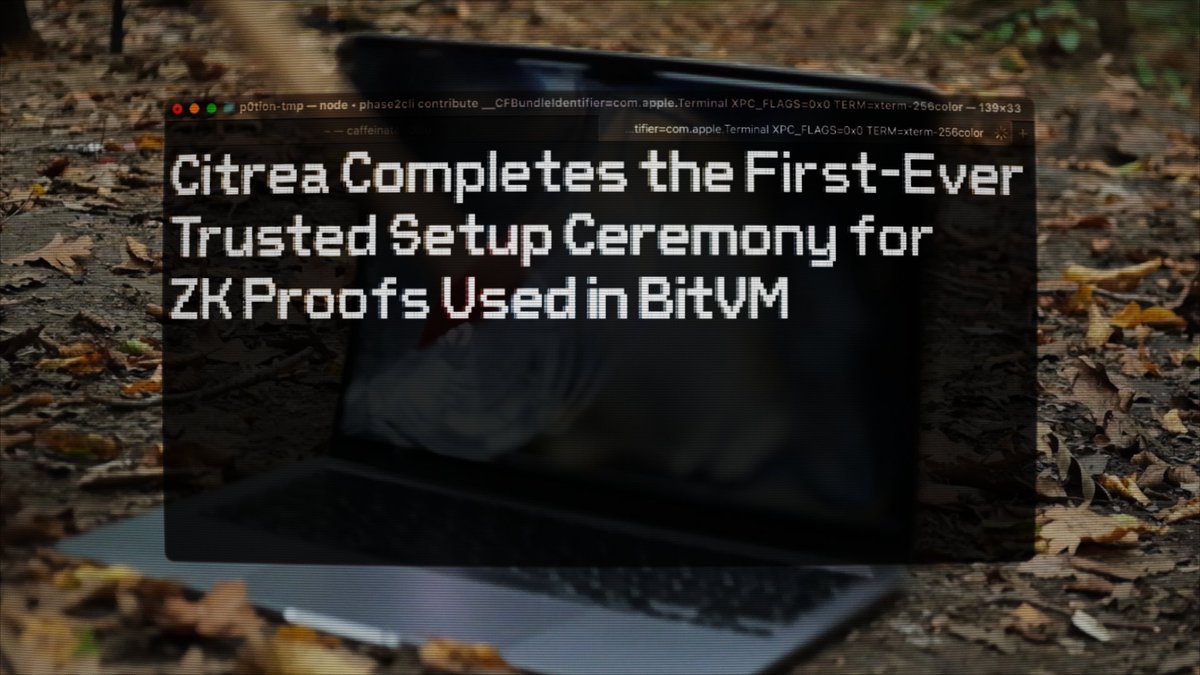
Recent milestones amplify Citrea's momentum. The completion of the first trusted setup ceremony for ZK proofs in BitVM ensures cryptographic soundness, paving the way for mainnet. Coupled with full audits of the rollup and bridge, these steps signal production readiness. For developers eyeing bitcoin scaling bitvm, Citrea provides blueprints: from ZK circuit design to BitVM verifier contracts, all open-sourced on GitHub.
Consider the implications. Traditional bridges introduce counterparty risk; Clementine's design mitigates this through multi-party computation and ZK validity. As BTC hit a 24-hour low of $88,094.00 today, such innovations reassure investors that scaling won't compromise decentralization.
Bitcoin (BTC) Price Prediction 2027-2032
Forecast incorporating Citrea ZK Rollup, BitVM advancements, and Bitcoin scaling for enhanced programmability and DeFi
| Year | Minimum Price | Average Price | Maximum Price | YoY % Change (Avg) |
|---|---|---|---|---|
| 2027 | $85,000 | $115,000 | $170,000 | +30% |
| 2028 | $130,000 | $200,000 | $320,000 | +74% |
| 2029 | $170,000 | $290,000 | $480,000 | +45% |
| 2030 | $240,000 | $410,000 | $680,000 | +41% |
| 2031 | $330,000 | $570,000 | $950,000 | +39% |
| 2032 | $450,000 | $760,000 | $1,300,000 | +33% |
Price Prediction Summary
Citrea's ZK rollup and Clementine Bridge position Bitcoin for explosive growth by enabling scalable, secure DeFi on BTC L1. From a 2026 baseline of ~$88,500, predictions reflect bullish adoption, 2028 halving, and tech maturity, with averages climbing to $760K by 2032 amid market cycles.
Key Factors Affecting Bitcoin Price
- Citrea ZK Rollup mainnet and BitVM-based Clementine Bridge launch
- 2028 Bitcoin halving increasing scarcity
- DeFi and smart contract expansion on Bitcoin
- Audited security and zero-knowledge proofs enhancing trust
- Favorable regulatory environment for scaling solutions
- Broader crypto market cycles and institutional adoption
Disclaimer: Cryptocurrency price predictions are speculative and based on current market analysis. Actual prices may vary significantly due to market volatility, regulatory changes, and other factors. Always do your own research before making investment decisions.
Clementine Bridge: Empowering Developers with Programmable BTC
The Clementine whitepaper details a sophisticated architecture: users lock BTC on L1, mint equivalent assets on Citrea, and redeem via BitVM challenges. This two-way peg operates without multisig custodians, relying instead on economic incentives and ZK guarantees. Developers benefit from EVM tooling, deploying contracts that interact with native BTC, fostering zkbtc citrea protocol applications like lending and derivatives.
Citrea's devnet already hosts exploratory dApps, hinting at a vibrant future. By scaling Bitcoin blockspace directly, it preserves the network's monetary premium while expanding utility. In a market where BTC stands at $88,504.00, projects like this bridge the gap between Bitcoin's security and Ethereum's expressiveness, offering developers unprecedented leverage in BTC scaling.
Building on this foundation, Citrea's open-source repository on GitHub invites developers to dive into the code, from ZK circuits to BitVM verifiers. This transparency not only accelerates innovation but also invites scrutiny, a hallmark of Bitcoin's ethos. As the network faces throughput pressures amid BTC's price stability at $88,504.00, such accessibility empowers builders to iterate rapidly on btc layer 2 rollups.
Developer Tools and Devnet: Hands-On with Citrea's Stack
Citrea's public devnet stands as a playground for experimentation, supporting EVM-compatible deployments alongside Bitcoin-native primitives. Developers can bridge testnet BTC via Clementine, execute smart contracts, and post ZK proofs directly to Bitcoin. This setup mirrors production, minus the economic stakes, allowing teams to prototype DeFi protocols or NFT marketplaces secured by BTC finality. The recent audit completion for both rollup and bridge removes key hurdles, signaling imminent mainnet prospects.
Listening to Citrea co-founder Orkun Kilic articulate the vision reveals a nuanced strategy: ZK rollups aren't just about speed; they're about preserving Bitcoin's sovereignty. By minimizing data on L1 to validity proofs, Citrea slashes costs during peaks, when BTC dipped to $88,094.00 today. Yet, it recirculates value back to Bitcoin, countering narratives of L2s draining L1 demand.
For those hands-on, here's a glimpse into Citrea's BitVM verifier logic, drawn from the repo. This snippet illustrates the challenge-response mechanism central to Clementine.
Simplified BitVM ZK Verifier Contract Example
Citrea leverages BitVM to settle ZK rollup states on Bitcoin without bridges or sidechains, relying on a verifier contract for on-chain proof validation. This ensures disputes are resolved economically and securely using Bitcoin's script execution. The following simplified example, drawn from concepts in the Citrea GitHub repository, illustrates the ZK proof verification logic central to this process.
class BitVMVerifier:
    def __init__(self, verifying_key):
        self.verifying_key = verifying_key

    def verify_zk_proof(self, proof, public_inputs):
        """
        Verifies a ZK-SNARK proof (e.g., Groth16) against the verifying key and public inputs.
        In Citrea's BitVM implementation, this is emulated via arithmetic circuits in Bitcoin Tapscript.
        """
        # Simplified validation logic
        if len(proof) != 256:  # Dummy size check
            return False
        # Placeholder for actual pairing-based verification:
        # e(proof.A, vk.B2) == e(vk.A, proof.B) * e(proof.C, vk.gamma) etc.
        # ...
        return True  # Assume valid for this example

# Dispute resolution example
vk = b'\x00' * 32  # Loaded verifying key
verifier = BitVMVerifier(vk)

# Simulate proposer posting proof
proof = b'\x01' * 256
public_inputs = b'\x02' * 64  # e.g., old_root || new_root || withdrawals

if verifier.verify_zk_proof(proof, public_inputs):
    print("ZK proof valid: Accept state transition.")
else:
    print("ZK proof invalid: Revert to previous state in dispute.")
In full BitVM fashion, this verifier is decomposed into verifiable computation chunks due to Bitcoin's script size limits. During a dispute, the proposer commits to a state root backed by a ZK proof, while a challenger can refute it by targeting a failing verification path via interactive fraud proofs. This thoughtful design minimizes on-chain footprint while maximizing Bitcoin's native security guarantees.
This code underscores Citrea's elegance: off-chain computation with on-chain arbitration, all in Bitcoin script. Developers extending zkbtc citrea protocol can fork these modules, customizing for yield farming or perpetuals backed by real BTC.
Milestones and Mainnet Horizon: Citrea's Path Forward
The trusted setup ceremony for ZK proofs in BitVM represents a cryptographic milestone, generating parameters that underpin the entire system. Multi-party protocols ensured no single point of trust, aligning with Bitcoin's principles. Deployed on Bitcoin Testnet, Clementine now processes real test transactions, proving the two-way peg's viability. Audits by top firms validated the designs, addressing potential vectors from ZK recursion to fraud-proof fallbacks.
Looking ahead, mainnet launch could catalyze adoption. Imagine DeFi TVL swelling on Bitcoin, with BTC as collateral in automated markets, all settled via BitVM. This isn't mere speculation; Citrea's devnet metrics show sub-second finality and fees fractions of L1. As BTC holds above $88,000 despite a 24-hour high of $89,512.00, investor appetite for scalable BTC primitives grows. Projects like this could redefine Bitcoin's role, blending store-of-value resilience with programmable dynamism.
Citrea challenges developers to rethink Bitcoin scaling. Where sidechains falter on security, and optimistic L2s on liveness, ZK rollups via BitVM offer validity and finality. Explore deeper into how ZK rollups transform Bitcoin scalability, and position your projects at the forefront. With tools ready and audits cleared, Citrea isn't just scaling blockspace; it's expanding Bitcoin's frontier for the next era of on-chain finance.




No comments yet. Be the first to share your thoughts!